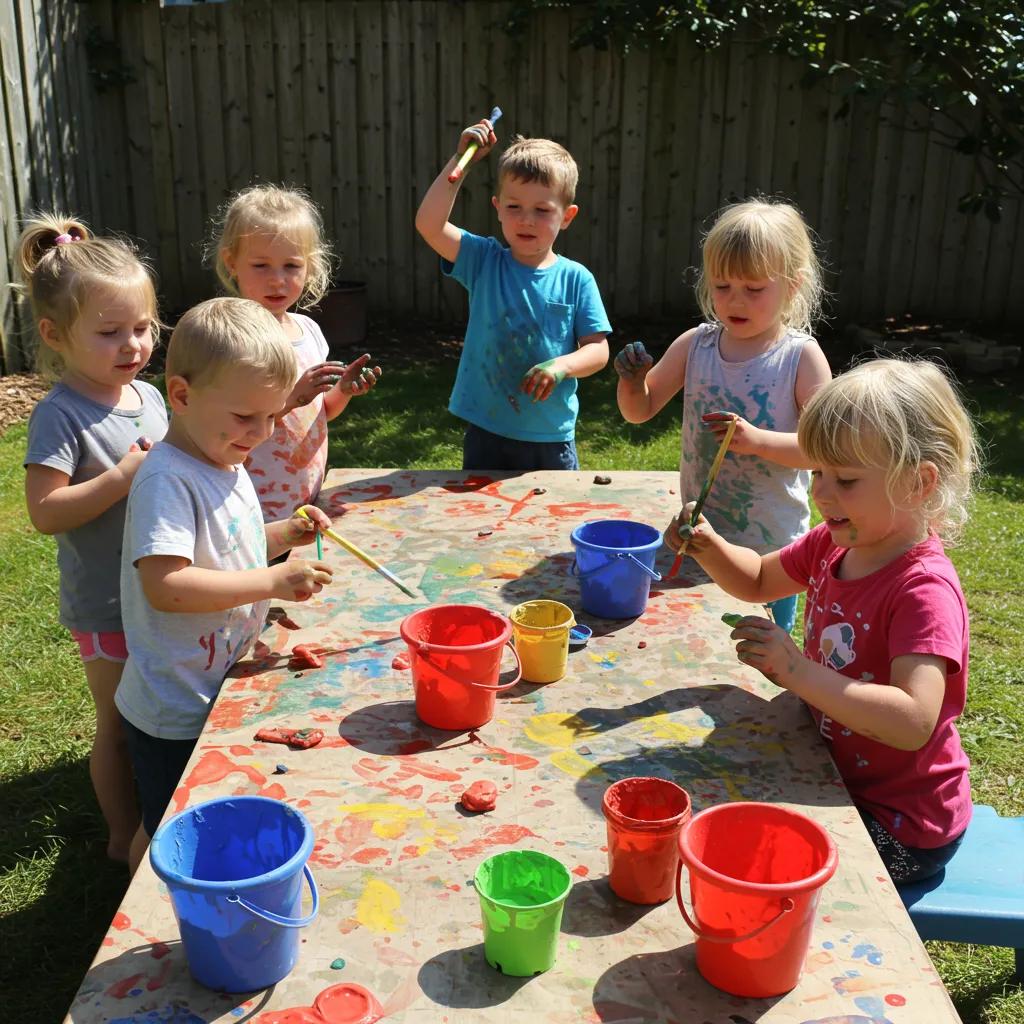
Messy Minds: Why Creative Chaos Builds Smarter Kids
Messy Minds: Why Creative Chaos Builds Smarter Kids Through Benefits of Messy Play and Child Development
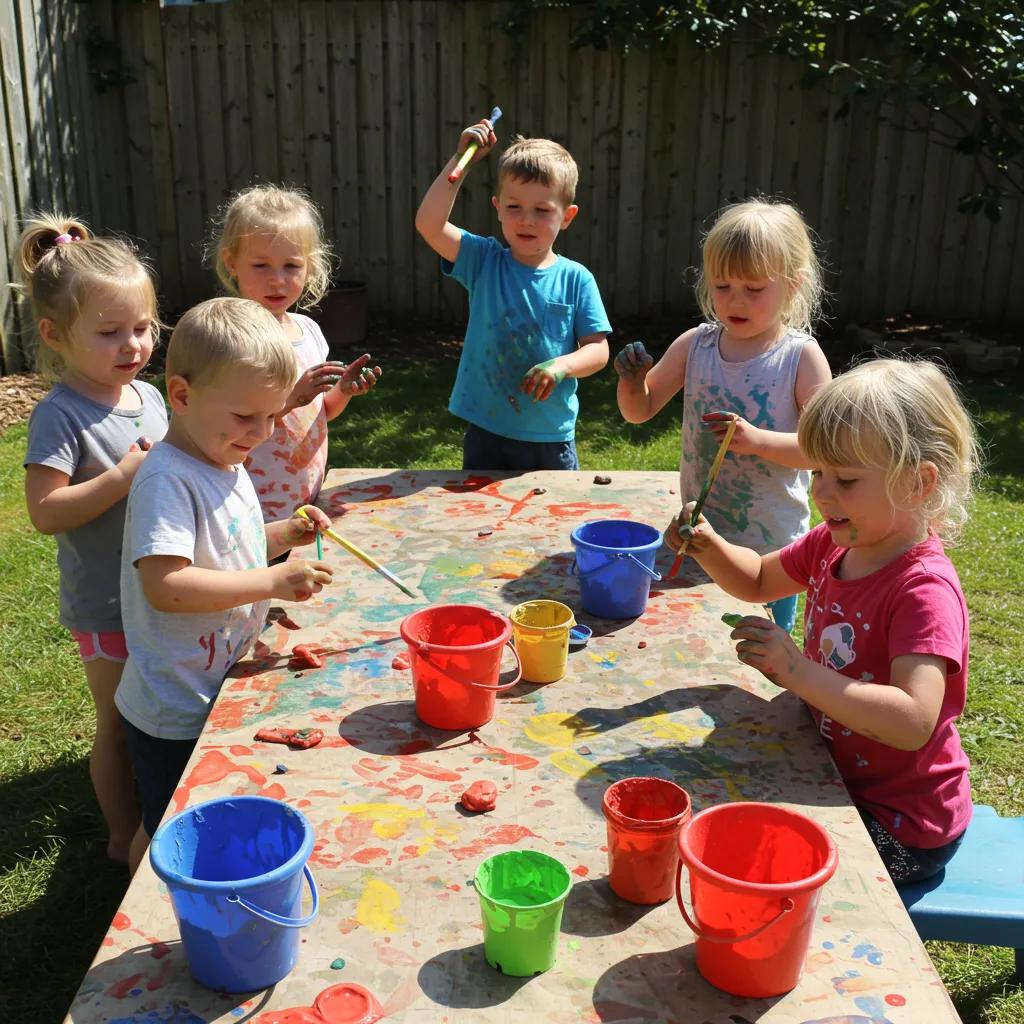
Children learning through messy play—what some call "creative chaos"—use open-ended, sensory-rich activities to explore cause and effect, test hypotheses, and practice social negotiation. This article explains how messy play supports cognitive flexibility, divergent thinking, sensory integration, and motor development with practical, age-banded ideas and classroom-ready assessment approaches. Many parents and educators worry about mess, safety, or wasted time; this guide addresses those concerns with cleanup strategies, low-cost setups, and measurable learning outcomes. You will find accessible neuroscience summaries, evidence-backed mechanisms, sample activities for toddlers and preschoolers, and templates for documenting progress. Each section combines clear definitions, how things work, and concrete examples so caregivers can implement messy play confidently and observe real developmental gains. The following pages cover why messy play matters, practical activity blueprints, the science that explains learning through creative chaos, adult strategies to foster imagination, common parental worries and solutions, the long-term skills messiness predicts, and program-level integration for early childhood settings.
Why Is Messy Play Important for Child Development?
Messy play is an open-ended, sensory-led form of play where children manipulate materials—paint, sand, water, clay—to learn by doing, and it works because multisensory input drives neural patterning and trial-and-error learning. This type of play accelerates synaptogenesis and builds cognitive flexibility by encouraging children to vary actions and observe outcomes, producing transferable problem-solving skills. Teachers and parents see immediate gains in expressive language, emotional regulation, and motor precision when children engage regularly in unstructured tactile experiences. Understanding these domain-wide benefits helps educators design activities that intentionally target developmental milestones while preserving child-led exploration.
Messy play provides measurable benefits across domains:
- Cognitive: Supports problem-solving and divergent thinking through experimentation.
- Emotional: Enables nonverbal expression and regulation via tactile materials.
- Social & Language: Promotes turn-taking, narrative building, and vocabulary expansion.
- Motor & Sensory: Strengthens fine motor coordination and sensory integration.
These benefits suggest clear pathways for educators to scaffold learning and track outcomes through observation and documentation.
Intro to the EAV table: The table below maps common messy-play benefits to the mechanisms that produce them and gives concrete activity examples educators can use to target each outcome.
| Developmental Benefit | Mechanism (How It Works) | Example Activity |
|---|---|---|
| Problem-solving & Divergent Thinking | Trial-and-error exploration encourages multiple solution paths | Sensory bin with hidden objects to sort and classify |
| Emotional Expression & Regulation | Tactile materials provide safe outlets for affect and calming sensory input | Fingerpainting to depict feelings and discuss choices |
| Social Communication & Language | Shared materials prompt negotiation and narrative scaffolding | Group mud-kitchen role-play with story prompts |
What Cognitive Benefits Does Messy Play Provide?
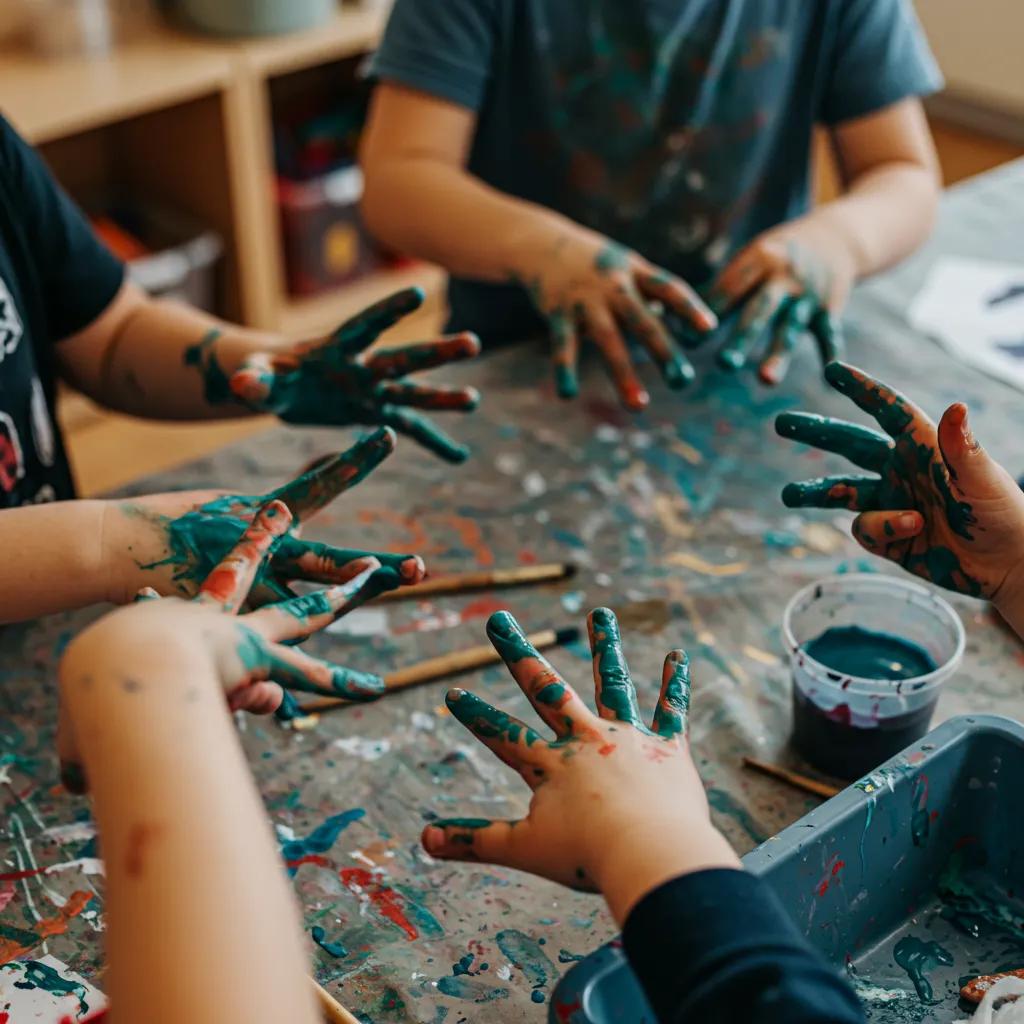
Messy play fosters core cognitive skills by creating repeated opportunities for children to hypothesize, test, and revise their ideas while engaging multiple sensory systems. This process strengthens executive function—planning, working memory, and inhibitory control—because children must sequence actions and resist impulsive choices to reach goals during open-ended tasks. Activities like building with wet sand or experimenting with mixing colors encourage divergent thinking, where children generate many possible outcomes rather than converging on a single "right" answer. Teachers can scaffold with targeted prompts that push children to predict outcomes and reflect on results, which reinforces metacognitive skills and supports later academic learning.
These cognitive gains lead naturally into emotional and social development because children practice tolerating frustration and communicating strategies with peers during messy projects.
How Does Messy Play Support Emotional Development and Expression?
Messy play supports emotional development by offering sensory channels for children to express feelings they may not yet verbalize, and the tactile input often has a calming regulatory effect. Working with clay, water, or paint lets a child modulate arousal: slow, rhythmic kneading soothes while exploratory splashing provides excitement in a controlled context. Vignettes from classrooms show children using process art to represent family scenes or big feelings, which adults can then reflect back as vocabulary for emotion regulation. When caregivers name emotions and model coping strategies post-activity, children begin linking internal states to external expression, improving emotional literacy over time.
This emotional attunement also sets the stage for richer social interactions, which are addressed next.
In What Ways Does Messy Play Enhance Social Skills and Language Development?
Messy play creates natural contexts for collaborative negotiation, turn-taking, and joint narrative construction because materials invite shared goals and role-play scenarios. When two children build a mud-kitchen meal, they practice sequencing ("first we mix, then we cook"), label actions ("stir," "pour"), and adopt roles that expand vocabulary and pragmatic language. Educator scaffolding—modeling phrases, expanding utterances, and asking open-ended questions—amplifies language growth from these interactions. Over time, repeated collaborative messy activities increase conversational turns and story complexity, which are strong predictors of preschool language outcomes.
These social and language gains align closely with motor development because many collaborative tasks require precise manual actions, which we cover next.
How Does Messy Play Develop Fine and Gross Motor Skills?
Messy play builds motor skills by offering graded challenges for hand and whole-body coordination: scooping and pouring strengthen pincer grasp and bilateral hand use, while digging and transporting materials develop balance and coordination. For toddlers, activities emphasize fine motor foundations—pinching rice in a sensory bin or using large spoons—progressing to preschoolers who handle scissors, glue, and more precise painting. Outdoor messy play adds gross motor opportunities like carrying buckets, climbing around loose parts, and balancing on uneven surfaces, which also support vestibular and proprioceptive development. Mapping activities to developmental milestones helps caregivers select age-appropriate tasks and observe motor progress.
Practical checklists and activity ideas below make it simple to choose goals and materials for each motor stage.
What Are Practical Messy Play Ideas and Activities for Early Childhood?
Messy play ideas should be age-appropriate, inexpensive, and designed to meet specific developmental targets while leaving room for child-led exploration. The following activities are grouped by setting and include materials, quick setup tips, and developmental targets so parents and educators can implement sessions with minimal prep. Clear safety notes accompany each suggestion to reduce parental concern and keep focus on learning. These activity snapshots work across Montessori, Reggio Emilia, and play-based curricula because they emphasize environment, loose parts, and the child as researcher.
Below is a high-value activity list that educators can use as a quick menu:
- Sensory Bin Treasure Hunt: Fill with rice, beans, and hidden objects to build fine motor and classification skills.
- Mud Kitchen Cooking: Use pots, spoons, and natural loose parts to practice role-play and gross motor coordination.
- Process Art Station: Provide paints, unusual textures, and open prompts to encourage divergent thinking.
- Water Exploration Table: Add funnels and measuring cups to introduce early math language and cause-effect reasoning.
- Slime or Oobleck Lab: Explore viscosity and science vocabulary through hands-on mixing and observation.
- Nature Collage Walk: Collect leaves, petals, and twigs outdoors to boost sensory discrimination and symbolic creativity.
These ideas scale easily for toddlers versus preschoolers by varying materials and scaffolding language prompts.
Intro to the EAV table: The table below lists activities, materials, and the primary developmental targets so caregivers can quickly select options by learning objective.
| Activity | Materials Needed | Developmental Targets |
|---|---|---|
| Sensory Bin Treasure Hunt | Rice/beans, scoops, small toys | Fine motor, sorting, vocabulary |
| Mud Kitchen Cooking | Buckets, spoons, loose parts | Social play, gross motor, role-play |
| Process Art Station | Paints, paper, textured materials | Creativity, emotional expression |
| Water Exploration Table | Funnels, cups, measuring tools | Early math, cause-effect reasoning |
Which Sensory Bin Ideas Are Best for Toddlers and Preschoolers?
Sensory bins are versatile and should be themed to invite exploration, vocabulary, and fine motor practice while observing age-appropriate safety standards. For toddlers, choose larger loose parts and avoid small choking hazards; rice-and-cup setups with large scoops work well. Preschoolers can handle more complex sorting tasks, pattern-making, and story-driven hunts that expand math and language. Rotate bin themes weekly—nature, color sorting, tactile textures—to sustain novelty and target different sensory channels. Extension prompts such as "How many blue pieces did you find?" or "Tell me a story about this object" convert play into measurable learning moments.
These bins provide rich opportunities for adult scaffolding and documentation of progress across domains.
How Can Outdoor Messy Play Adventures Foster Creativity?
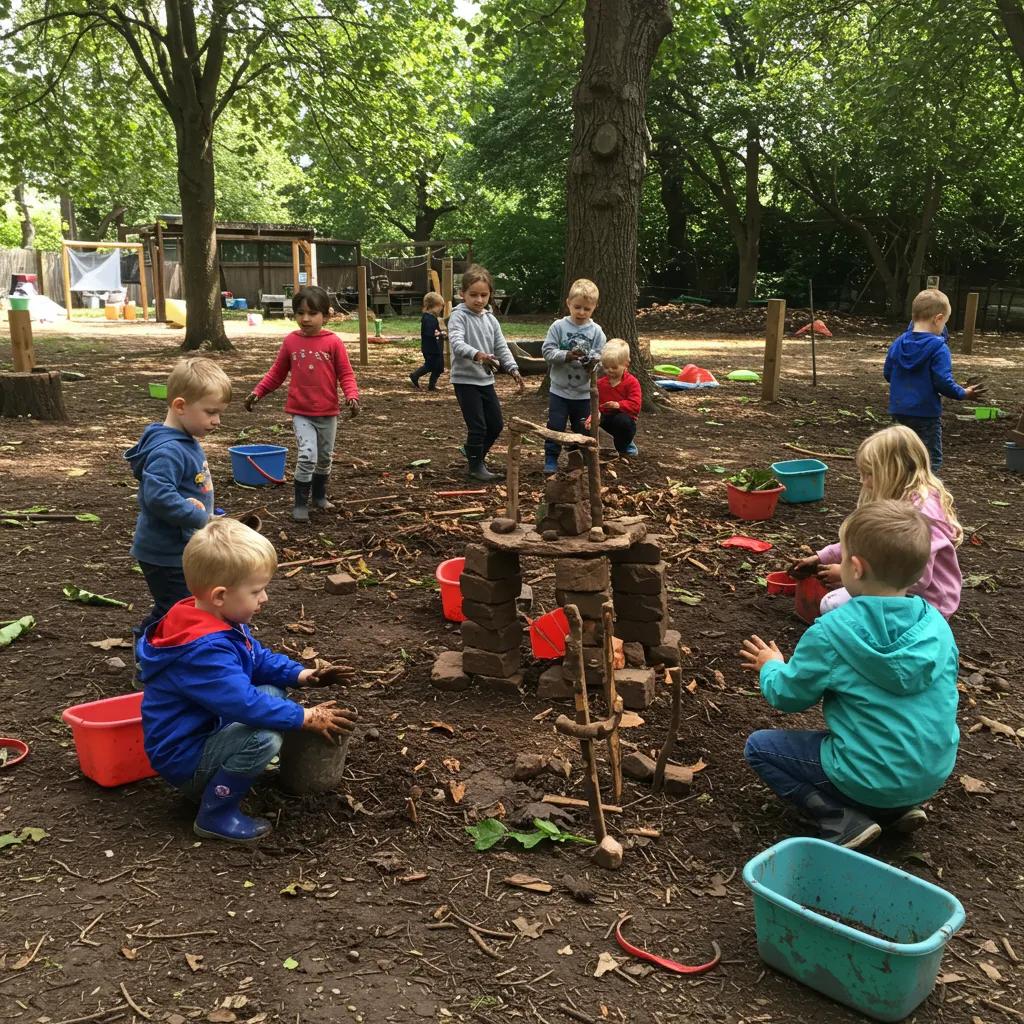
Outdoor messy play leverages open space and natural loose parts to amplify sensory experiences and invention, encouraging children to combine materials in unexpected ways. Simple setups like a mud kitchen, loose-parts construction area, or puddle exploration invite creative problem-solving and large-movement tasks that indoor spaces cannot replicate. Educators should provide waterproof clothing options and sun/rain contingencies, and use weather as a learning variable—how does rain change texture?—to build observational language. Outdoor messy play also cultivates environmental literacy as children learn to repurpose found objects and reflect on natural cycles.
The freedom of outdoor settings often leads directly into richer storytelling and collaborative engineering projects among peers.
What Art and Craft Activities Encourage Creative Expression?
Process-focused art invites experimentation: offer open materials (cardboard, fabric, natural dyes) and prompts that emphasize exploration rather than finished products. Encourage children to mix pigments, layer textures, and use unconventional tools (sponges, sticks) to broaden motor skills and sensory palettes. Educator footnotes—modeling curiosity, asking "What happens if…?" and reframing mistakes as discoveries—help children persist through trial-and-error and expand divergent thinking. Displaying works-in-progress and documenting the creative process validates child-led inquiry and supports language growth through descriptive reflection.
Process art becomes a narrative resource when teachers record children’s commentary and link materials to emotions and ideas.
How Does Pretend Play Support Imagination and Cognitive Growth?
Pretend play transforms materials into symbols, which strengthens symbolic representation, abstract thinking, and narrative sequencing—core cognitive skills needed for literacy and problem-solving. Role-play sets like a market, home, or doctor’s corner allow children to adopt perspectives and rehearse social scripts, promoting perspective-taking and negotiation. Providing minimal props and letting children assign meanings encourages creativity and lifts ideas beyond mimicry into invention. Observing children’s scenarios gives educators insight into cognitive stages and vocabulary targets, which can be documented as learning stories and used to plan follow-up provocations.
Pretend play’s symbolic leaps directly feed into divergent thinking and planning abilities across contexts.
What Is the Science Behind Creative Chaos and Learning in Children?
Creative chaos matters neurologically because multisensory, unpredictable experiences increase synaptic connectivity and strengthen large-scale brain networks involved in attention, memory, and cognitive flexibility. Sensory-rich inputs drive synaptogenesis and reinforce associative learning by linking tactile, visual, and motor patterns, which supports later executive function. Recent studies show that unstructured play correlates with higher idea fluency and better problem-solving in preschool-aged children, suggesting a mechanistic bridge from early sensory experience to cognitive outcomes. Understanding these mechanisms helps educators design experiences that deliberately stimulate neural integration without over-structuring the child’s exploratory process.
The short table below outlines mechanisms, descriptions, and supporting evidence summaries to ground practice in contemporary research.
| Neural/Behavioral Mechanism | Description | Evidence/Study Reference |
|---|---|---|
| Synaptogenesis & Plasticity | Repeated sensory-motor pairings strengthen neural pathways | Recent observational and neuroimaging work shows increased connectivity after enriched play |
| Multisensory Integration | Combining touch, sight, and proprioception improves regulation | Therapeutic and developmental studies link multisensory play to attention gains |
| Executive Function Practice | Open-ended tasks exercise planning and inhibition | Preschool classroom trials associate free play with better self-regulation scores |
How Does Creative Chaos Enhance Cognitive Flexibility and Divergent Thinking?
Creative chaos enhances cognitive flexibility by repeatedly exposing children to variable outcomes that force them to adjust strategies, which trains the brain to shift between perspectives and solutions. Divergent thinking emerges when materials have multiple uses and no single right answer, prompting children to generate novel ideas and test alternatives. Experimental classroom observations show increased idea fluency when children experience regular unstructured play opportunities, and brief interventions that reduce adult direction improve flexibility measures. Encouraging children to try different tools or repurpose found materials cultivates this form of adaptive thinking.
These cognitive routines translate later into adult innovation skills like ideation and iterative problem-solving.
What Role Does Sensory Integration Play in Child Development?
Sensory integration refers to the brain’s process of organizing sensory inputs into coherent perceptions and actions, and messy play engages tactile, vestibular, proprioceptive, visual, and sometimes auditory systems simultaneously. When a child pours water, feels temperature, and watches splash patterns, they link perception with action, which supports attention control and emotional regulation. For children with sensory processing challenges, guided messy play under professional advice can scaffold tolerance and responsiveness; red flags such as extreme avoidance or pain reactions warrant specialist consultation. Regular, varied sensory experiences in safe contexts build robust sensory maps that underpin learning and regulation.
By engaging several sensory systems at once, messy play creates rich neural contexts for adaptive behavior and focused attention.
How Does Unstructured Play Develop Problem-Solving Skills?
Unstructured play cultivates problem-solving by inviting children to set goals, enumerate options, and evaluate outcomes without predefined success criteria, which mirrors the scientific method at an early level. Micro-experiments—what happens if we add more water?—teach cause-effect reasoning and hypothesis testing while promoting persistence after failed attempts. Educators can create observational prompts and small documentation tasks to capture instances of planning, testing, and revision during play, turning ephemeral moments into assessable learning. Documenting problem-solving sequences in play offers reliable evidence of cognitive growth and informs next-step provocations.
How Can Parents and Educators Foster Creativity and Imagination in Early Childhood?
Adults foster creativity best by preparing environments that invite choice, offering minimal but rich materials, and practicing responsive observation rather than immediate intervention. Core principles of child-led learning—autonomy, scaffolding, documentation, and respectful facilitation—allow children to take intellectual risks and build internal motivation for exploration. Balancing open-ended experiences with occasional structured challenges creates a curriculum that targets specific skills while protecting the space for divergent thought. Storytelling and reflective questioning further extend play narratives and embed new vocabulary, strengthening language and imaginative capacities.
Adopting these principles supports a sustainable culture of creativity in homes and classrooms, which is explained in the subsections below.
What Are the Principles of Child-Led Learning in Messy Play?
Child-led learning centers agency: children choose materials and direct activities while adults observe, scaffold, and extend without dominating the play. This approach values autonomy, uses the environment as the "third teacher," and relies on documentation to assess learning rather than product-focused evaluation. Practical examples include offering a tray of mixed materials and following the child’s lead with targeted questions like "What are you trying to make?" rather than instructing steps. Observational notes and photos serve as evidence for planning future provocations and communicating progress to families.
These principles create a feedback loop where child interests inform curriculum and adults tailor supports to individual developmental trajectories.
How Does Open-Ended Play Differ from Structured Activities?
Open-ended play invites exploration without fixed outcomes and emphasizes process, creativity, and intrinsic motivation, whereas structured activities target specific skills with defined steps and expected results. The adult role shifts from director to facilitator in open-ended contexts, providing materials and subtle prompts; in structured activities, adults model and teach procedures. A healthy program blends both: short targeted lessons teach discrete skills, followed by open exploration to generalize those skills. Recommended balances vary by age and goal, but a typical pattern is brief focused instruction followed by extended free play to consolidate learning.
Understanding these contrasts helps educators design schedules that nurture both skill acquisition and creative capacity.
How Can Storytelling Encourage Imagination and Language Skills?
Storytelling extends messy play by turning child creations into narrative prompts that deepen vocabulary and sequential thinking, and it can be done with simple questions that model descriptive language. Prompts like "Who lives in this mud house?" or "What happens next to your painting?" encourage children to name attributes, actions, and emotions while structuring narratives. Educators can provide extension questions and record children’s stories as learning artifacts that link imaginative play to literacy development. Turning play artifacts into stories supports symbolic thinking and makes abstract language concrete through familiar contexts.
These techniques both scaffold language and preserve children's ideas for later reflection and assessment.
What Are Common Parental Concerns About Messy Play and How Can They Be Managed?
Parents commonly worry about cleanup time, safety, and the perception that mess equals chaos rather than learning, but practical routines and containment strategies reduce friction and make messy play feasible. Preparing washable surfaces, limited material sets, and involving children in tidy-up turns playtime into lifetime learning for responsibility. Safety checks—age-appropriate materials, supervised use of small parts, and allergy-aware supplies—prevent most incidents and allow families to enjoy the developmental benefits without undue risk. Clear rules and consistent expectations maintain boundaries while preserving the exploratory nature of messy play.
Below is a short checklist and a cleanup list to make preparation and recovery simple for busy caregivers.
- Prep the Space: Use waterproof mats, old sheets, or outdoor settings to protect surfaces.
- Contain Materials: Sensory bins, trays, and shallow tubs limit spread and simplify cleanup.
- Set Expectations: Offer simple rules and involve children in cleaning as a learning step.
- Choose Washable Materials: Opt for washable paints and easily laundered clothing to reduce anxiety.
- Safety First: Avoid small items for toddlers and check for known allergies before materials use.
These steps turn cleanup into a predictable routine that supports autonomy and responsibility in children.
What Are Easy Cleanup Strategies for Messy Play at Home?
A quick cleanup routine minimizes resistance: prepare the area with a washable mat, have labeled containers for tools, and use a two-minute tidy-up song to involve children in returning materials to bins. Use trays and shallow tubs to confine loose items and keep cleaning supplies—wet wipes, a bucket, and a small broom—handy for immediate action. For paint or glue, pre-soak fabrics in cool water and launder promptly; for outdoor mud, a hose-off ਆ area works well. Involving children in cleanup with specific roles (put spoons here, carry tray there) transforms tidying into a social and motor-learning activity.
Teaching cleanup as part of the play routine also reinforces rules and helps children internalize organizational habits that support future learning.
How Can Parents Create a Dedicated Messy Play Zone?
Design a messy play zone by identifying washable surfaces, clear boundaries, and storage that keeps materials accessible but contained; even small apartments can use portable kits on a balcony or bathroom floor. Three sample layouts—apartment tray setup, backyard mud station, and classroom corner—demonstrate scalable approaches using inexpensive containers, tarps, and labeled baskets. Rotate materials weekly to maintain novelty and store supplies in clear bins for quick access. A dedicated zone reduces setup friction and signals to children when exploratory activities are allowed.
A consistent zone both protects the rest of the home and communicates expectations, making messy play sustainable long-term.
How Do You Balance Freedom and Structure in Messy Play?
Balance freedom and structure by setting simple, consistently enforced boundaries (tools stay on the mat, materials are shared) while offering choices within those limits so children exercise autonomy. Use an adult prompt bank—"Show me what happens if…" or "Tell me why you chose that?"—to support reflection without taking control. Observe and step in only when safety or learning objectives require it, otherwise follow the child’s lead and document moments for later discussion. This strategy preserves the creative benefits of open play while teaching cooperative routines and responsibility.
A gentle scaffolding approach ensures children learn rules while continuing to explore creatively.
How Does Early Exposure to Creative Chaos Impact Long-Term Skills and Success?
Early messy play predicts adult competencies such as creativity, adaptability, collaborative problem-solving, and resilience by repeatedly exercising flexible thinking and risk-tolerant exploration during foundational years. When children practice divergent thinking and iterative testing, they build habits of idea generation and resilient response to failure that translate into innovation skills in later learning and work contexts. Educational philosophies that prioritize agency and process—like Montessori and Reggio Emilia—further reinforce these outcomes by embedding child-led inquiry into daily routines. Recognizing the long-term payoffs helps justify curricular time and resources for messy play within early childhood programs.
Below we map adult skills back to childhood markers so educators and parents can observe early indicators of later strengths.
What Adult Skills Develop from Childhood Messy Play?
Childhood messy play cultivates creativity and innovation by habitualizing idea generation and experimentation, builds adaptability by normalizing iteration and response to unpredictable outcomes, and strengthens collaborative problem-solving through negotiated play scenarios. Observational markers include children who propose multiple solutions during play, persist through frustration, and effectively communicate roles in group tasks. These early behaviors predict capacities important in adult team-based work: ideation, resilience, and pragmatic communication. Documenting these markers helps educators link daily play to long-range skill development.
Noticing and recording such patterns enables targeted interventions that amplify trajectories toward these adult competencies.
How Do Educational Philosophies Like Montessori and Reggio Emilia Support Messy Play?
Montessori emphasizes a prepared environment with purposeful, self-correcting materials that encourage independence and focused exploration, while Reggio Emilia values documentation, community engagement, and open materials to stimulate inquiry and collaboration. Both traditions validate child-led messy exploration: Montessori through deliberate materials that refine motor and cognitive skills, Reggio Emilia through atelier practices that celebrate process and reflection. Classrooms inspired by these philosophies allocate space, time, and teacher roles that privilege child agency and developmental observation, creating fertile conditions for messy play to produce measurable learning.
Understanding these philosophical roots helps educators select pedagogical strategies that preserve the integrity of messy learning.
What Recent Research Supports the Benefits of Messy Play?
Recent studies (2023–2025) increasingly link sensory-rich, open-ended play to neural connectivity, executive function gains, and improved creativity in early childhood cohorts. Summaries of current findings include evidence that multisensory play correlates with measurable increases in attention and regulatory capacity, classroom trials showing greater idea fluency after regular unstructured play sessions, and longitudinal work associating early play richness with later problem-solving metrics. These research threads reinforce practice-based observations and support policy choices that protect playful learning time in early education.
Bringing research into classroom planning strengthens program justification and helps align messy play with measurable learning outcomes.
For organizations translating childhood creativity into workforce-ready skills and adaptive cultures, consider this bridge: adults who develop flexible, exploratory habits as children tend to contribute more innovatively in teams and adapt well to changing operational contexts.
How Can Messy Play Be Integrated Into Early Childhood Education Programs?
Integrating messy play into programs means scheduling daily exploratory windows, training staff to observe and document learning, and setting material-rotation and hygiene systems that keep operations efficient. Program-level planning includes short lesson snapshots for 15–30 minute explorations, extended project-based messy play across weeks, and clear assessment checkpoints mapped to developmental domains. Logistics—materials sourcing, storage, and staff coaching—determine operational efficiency and cost-effectiveness while ensuring safety and learning continuity. With careful design, messy play becomes a replicable part of curricula that yields clear, documentable outcomes.
The subsections below include sample lesson structures, assessment templates, and operational tips that support scale-up in classrooms.
What Are Effective Play-Based Learning Strategies Using Messy Play?
Effective strategies blend brief teacher-led provocations with extended child-led exploration: introduce an open question or material in 5–10 minutes, then allow 20–40 minutes of free investigation where teachers observe and occasionally scaffold. Sample lessons include a 15-minute "color-mixing lab" followed by 25 minutes of open art and a documentation period where children narrate their process. Differentiation can be achieved by modifying tools (larger scoops for toddlers, fine brushes for preschoolers) and adjusting prompts to match abilities. Embedding short assessment moments—asking children to predict or explain—creates teachable data points without interrupting flow.
Measuring outcomes during these routines supports program quality and continuous improvement; for organizations seeking operational guidance, measurable systems are essential.
How Do Educators Assess Development Through Messy Play Activities?
Assessment during messy play relies on observational rubrics, photographic documentation, and learning stories that map behaviors to developmental domains rather than traditional test scores. A simple rubric can rate planning, persistence, vocabulary use, and collaborative negotiation on a 1–4 scale during a single session, producing data points for progress monitoring. Documentation—brief notes paired with photos—creates transparent evidence for family conferences and curriculum planning. Using consistent indicators across classrooms ensures comparability and supports program evaluation over time.
These assessment practices make messy play outcomes visible and actionable for curriculum adjustments and family communication.
Intro to the EAV table: The table below outlines operational choices, their attributes, and the practical outcomes programs can expect when integrating sensory and creative activities.
| Program Element | Key Attribute | Operational Outcome |
|---|---|---|
| Material Rotation | Frequency and diversity | Sustains engagement and reduces waste |
| Staff Training | Observation & facilitation skills | Higher quality documentation and scaffolding |
| Hygiene Protocols | Cleaning schedules & storage | Safety and reduced illness-related disruption |
What Role Do Sensory and Creative Activities Play in Preschool Settings?
Sensory and creative activities are core curriculum drivers in preschool settings because they simultaneously build motor, language, social, and cognitive skills while being low-cost and highly engaging. Embedding short daily sensory explorations alongside thematic projects allows programs to hit multiple learning objectives each week without extensive materials budgets. Cost-saving sourcing—bulk natural loose parts, community donations, and recycled materials—combined with staff coaching on facilitation keeps programs affordable. Staff training should emphasize observation, documentation, and safe material handling to preserve quality while scaling messy play across classrooms.
Operationalizing these practices enables centers to deliver developmental results consistently and demonstrate impact to stakeholders.
Neuroscience, Early Childhood Education, and Play: Understanding Brain Development
The four principles are: (1) the brain is uniquely organized; (2) the brain is continually growing; (3) a “brain-compatible” classroom enables connection of learning to positive emotions; and (4) children’s brains need to be immersed in real-life, hands-on, and meaningful learning experiences. The editorial concludes with an illustration of how the brain works while two children are playing at the small animal center in their classroom.
Neuroscience, early childhood education and play: We are doing it right!, S Rushton, 2011
