Language Learning Through Play: Helping Children Become Little World Explorers
Language Learning Through Play: Helping Children Become Little World Explorers
At Kidazzle, we believe that every child is a natural learner, full of curiosity and energy. One of the most exciting ways to nurture that curiosity is by introducing children to new languages. And the best part? It doesn’t have to be complicated. With songs, games, and playful activities, children can absorb new sounds and words without even realizing they’re learning.
To understand how early learning shapes a child’s brain, read our detailed guide on Early Brain Development & Learning in Children.
You can also explore how storytelling boosts communication skills in our blog Story Builders: How to Turn Everyday Moments into Language Lessons for Child Development.
If you're interested in building strong emotional skills, check out The Importance of Teaching Patience in Daycare Kids.
Why Play Matters in Language Learning
Play is how children make sense of the world. When kids are engaged in singing, clapping, or pretending, they are relaxed, open, and ready to learn. Adding a few words from another language into everyday play—like saying “hola” during a hello song—turns fun moments into powerful learning experiences.
Research shows that children are especially good at picking up new sounds and rhythms before the age of seven. By weaving in simple words from languages like Spanish, French, or Mandarin during playtime, we give kids a strong foundation for future learning.
How We Do It at Kidazzle
At Kidazzle, we create playful environments where language learning feels natural:
Song Circles with Gestures – Children sing familiar tunes like “Hello” or “Good Morning” while adding simple words in another language, paired with clapping or waving.
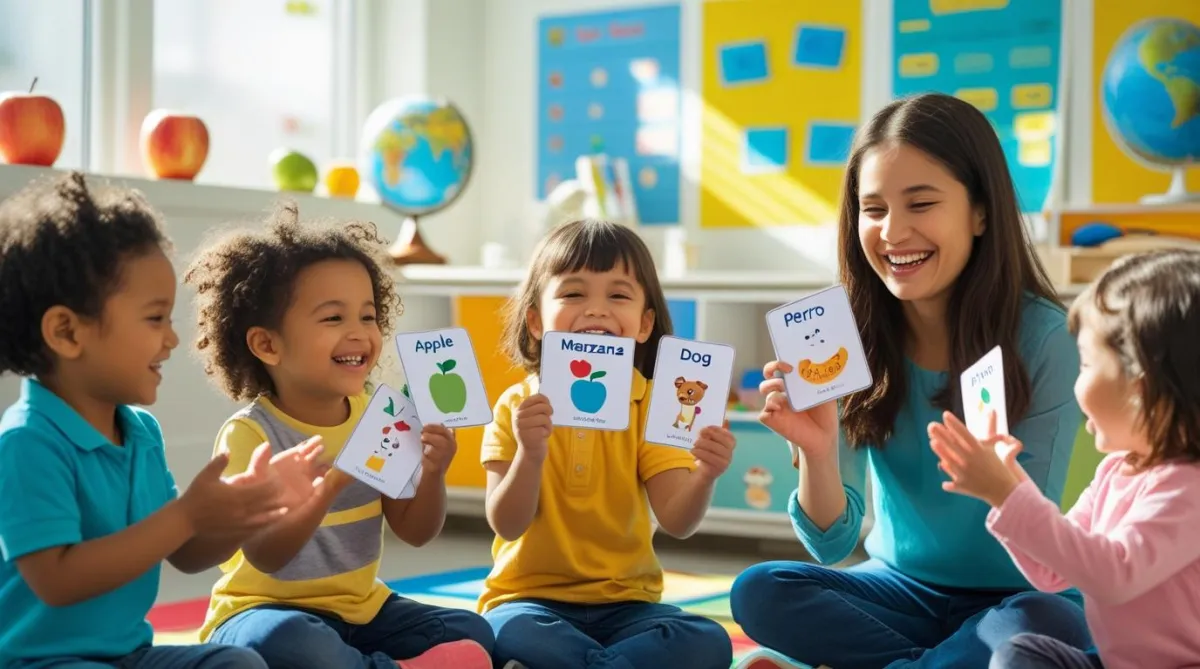
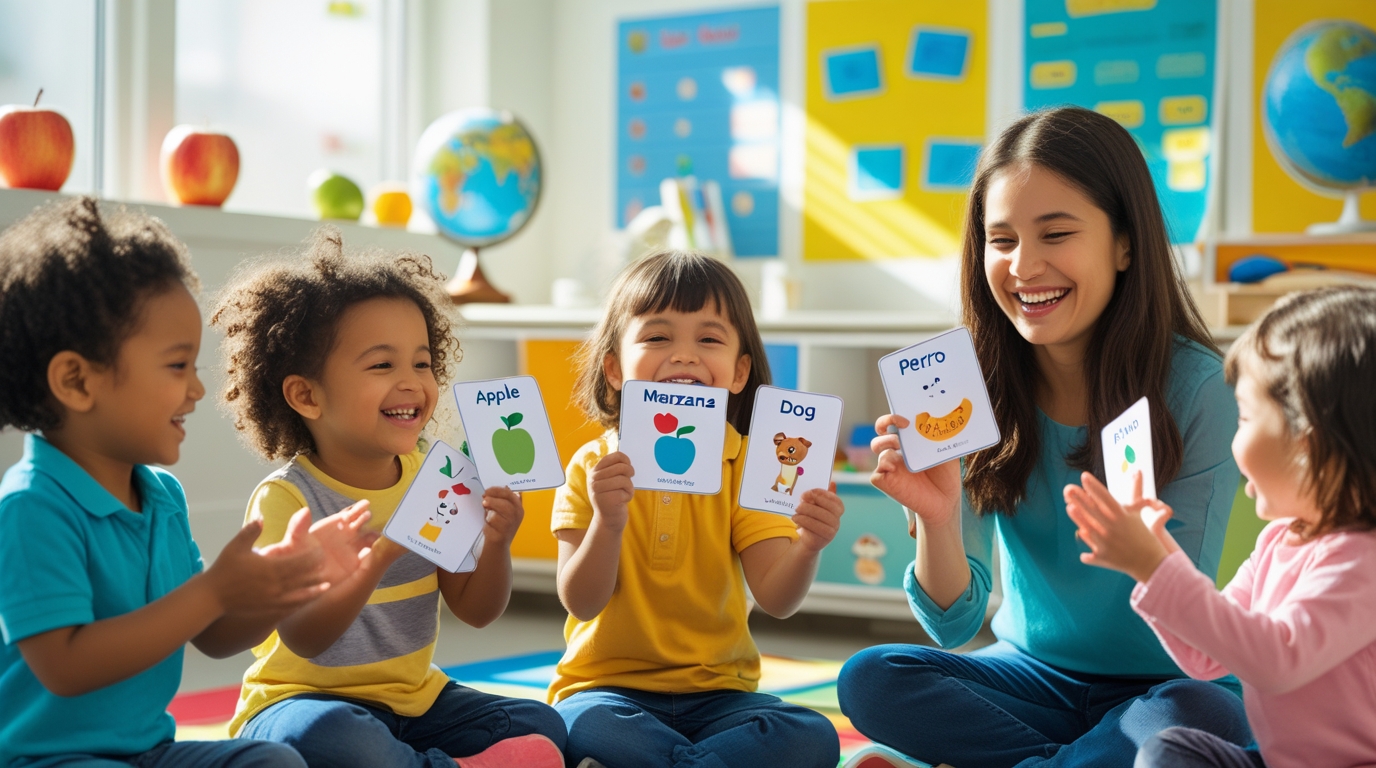
Flashcard Matching Games – Kids flip over cards (🍎 apple / manzana, 🐶 dog / perro) and shout out the words together, turning vocabulary into a game.
Movement Activities – When kids hear words like “jump,” “run,” or “smile” in another language, they act them out—learning through both body and mind.
Storytime Adventures – Our teachers sprinkle in words from different languages during storytelling, helping kids make connections through context and imagination.
The Benefits Beyond Words
Language learning through play doesn’t just build vocabulary—it develops confidence, memory, social skills, and cultural awareness. When children laugh, sing, and explore words together, they’re also learning empathy and understanding of other cultures.
Parents often tell us how excited their child is to come home and say “bonjour” or sing a song with new words they’ve learned. These small steps create big smiles—and big learning moments.
Growing Global Citizens
In today’s world, knowing more than one language is a superpower. By introducing children to new sounds and cultures early, we’re helping them grow into curious, open-minded global citizens.
Simple Activities Parents Can Try at Home
Parents can easily support language learning at home with small daily habits. Try greeting your child in a new language every morning, labeling common objects around the house, or playing bilingual songs during playtime. Even watching cartoons in another language can help children get familiar with different sounds and tones.
Consistency matters more than complexity. Just a few minutes of playful language exposure every day can make a big difference in your child’s confidence and understanding.
At Kidazzle, we’re not just teaching words—we’re opening doors to a world full of possibilities, cultures, and meaningful connections. Through play-based learning, every child becomes a confident little world explorer.
Also read: Language Learning Through Play: Helping Children Become Little World Explorers
Frequently Asked Questions (FAQs)
1. What is the best age for children to start learning a new language?
Children can start learning new languages as early as infancy, but ages 2 to 7 are considered ideal because their brains are highly receptive to new sounds and patterns.
2. Can learning multiple languages confuse a child?
No, children are naturally capable of learning multiple languages without confusion. In fact, it can improve cognitive flexibility and problem-solving skills.
3. How can parents teach language at home without being fluent?
Parents can use songs, videos, flashcards, and simple words during daily routines. Learning together can also be a fun bonding experience.
4. How often should language activities be done?
Short, consistent sessions—about 10 to 15 minutes daily—are more effective than long, irregular learning sessions.
5. What are the benefits of learning languages through play?
It improves memory, communication skills, creativity, and helps children become more confident and socially aware.
