A Practical Guide to Speech Development Milestones 0-3 Years
A Practical Guide to Speech Development Milestones 0-3 Years
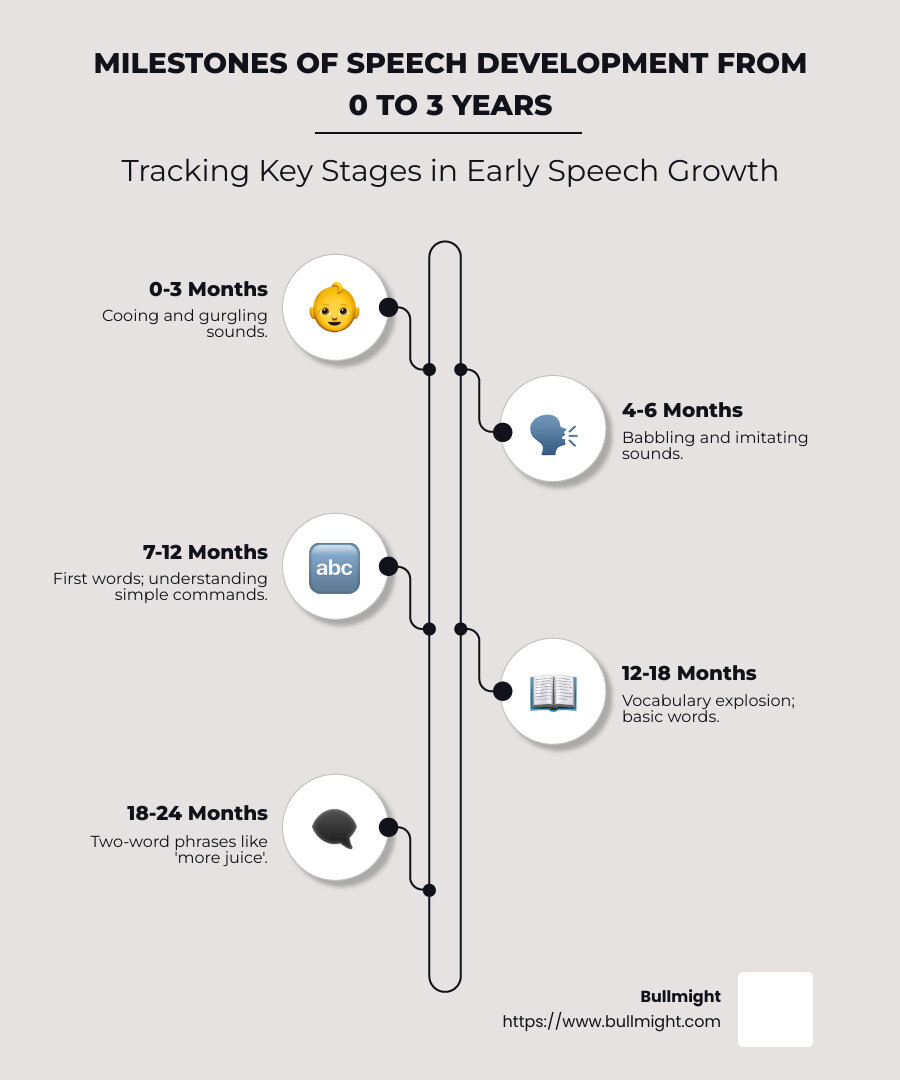
The Milestones of Speech Development from 0 to 3 yearsare critical for understanding how children begin to communicate and interact with the world. Let's break it down quickly:
0-3 months: Babies coo and make gurgling sounds.
4-6 months: They start babbling more, imitating speech sounds.
7-12 months: The first words might appear! They understand simple words and commands.
12-18 months: Vocabulary explosion begins; toddlers can say basic words.
18-24 months: Phrases with two words emerge, like "more juice."
24-36 months: Sentences get longer and vocabulary expands rapidly.
Speech development is a fascinating journey, with each milestone offering insights into a child's growing understanding and expression. Parents might wonder if their child is on the right track or if they need assistance. That's where early intervention becomes important.
If milestones seem delayed, trust your instincts and consult a professional. Early conversations with a healthcare provider can pave the way for effective early intervention through speech evaluations or guidance for speech-language development at home.
Understanding these milestones is not a rigid checklist but a helpful guide to ensure your child is progressing well. Each child is unique, and some variation in development is normal. However, staying informed helps you act quickly if things seem off-track.
If you're looking for deeper guidance beyond potty training, our practical guide to early childhood parenting helps parents make confident decisions for their child’s overall development.
Understanding Speech Development Milestones
Speech development is a complex process that begins at birth and continues into early childhood. Understanding these milestones is crucial for parents who want to ensure their child is developing appropriately.
Neurological Basis
The journey of speech development is deeply rooted in the brain. Babies are born with the ability to learn any language, thanks to their brain's plasticity. This means the brain is highly adaptable and can change in response to experiences.
During the first three years, the brain undergoes rapid growth, forming connections that are vital for language acquisition. This period is critical because the brain is most receptive to learning language skills. The more a child is exposed to language, the stronger these neural connections become.
Developmental Checklists
Developmental checklists are valuable tools for tracking speech milestones. These checklists provide a general timeline of what most children can do at certain ages. They include key milestones like babbling, first words, and simple sentences.
0-3 months: Responds to sounds and coos.
4-6 months: Begins babbling and mimicking sounds.
7-12 months: Understands simple words and may say a few.
12-18 months: Vocabulary starts to grow with simple words.
18-24 months: Combines two words to form phrases.
24-36 months: Uses longer sentences and has a rapidly expanding vocabulary.
These checklists are guidelines, not strict rules. Every child is unique, and variations are normal. However, if you're concerned about your child's progress, these checklists can help you identify potential delays.
Expressive Language
Expressive language refers to how children communicate their thoughts and feelings. It's not just about speaking words. It includes gestures, facial expressions, and any form of communication a child uses to express themselves.
As children grow, their ability to express themselves becomes more sophisticated. Initially, they might use gestures or single words. Over time, they learn to construct sentences and engage in conversations.
The key to fostering expressive language is interaction. Talk to your child, read to them, and encourage them to express themselves in various ways. This interaction helps reinforce neural pathways and supports language development.
Understanding these milestonesand how they relate to your child's neurological development can help you support their speech journey. If you're ever unsure about your child's progress, consulting a speech-language pathologist can provide clarity and guidance.
Next, we'll explore how bilingual and monolingual speech development compare and what to expect in each scenario.
The Milestones of Speech Development from 0 to 3 Years
Receptive Languageis the foundation of speech development. It's how children understand and process language before they start speaking. Even before babies can talk, they are busy soaking up the world around them.
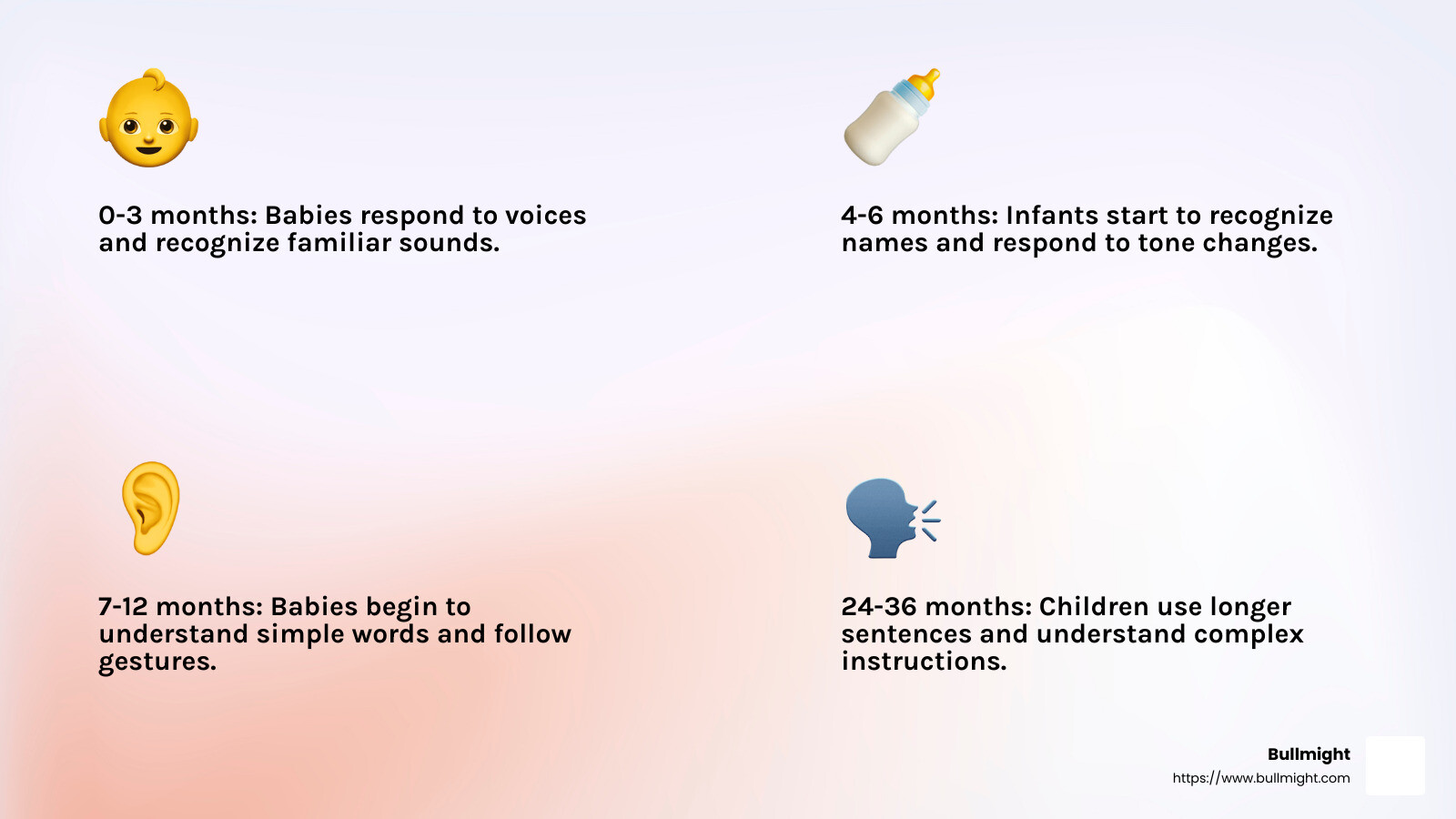
0-3 months: Babies respond to voices by turning their heads and showing interest in sounds. They recognize familiar voices and may calm down when they hear them.
4-6 months: Infants start to recognize their names and respond to changes in tone. They may turn towards sounds and show excitement when hearing familiar voices.
7-12 months: Babies begin to understand simple words like "no" or "bye-bye" and follow simple directions, especially if paired with gestures.
12-18 months: Toddlers understand more words than they can say. They can follow simple instructions and recognize names of familiar people and objects.
18-24 months: Comprehension grows rapidly. Children can point to pictures in books when named and follow two-step directions.
24-36 months: By this age, children understand complex instructions and can identify objects by their function, like "Which one do we eat with?"
Expressive Speechis how children convey their thoughts and needs. It's a gradual process that begins with cooing and babbling and evolves into words and sentences.
0-3 months: Babies coo and make gurgling sounds. These early vocalizations are the precursors to speech.
4-6 months: Babbling starts, and babies experiment with different sounds. This stage is crucial as it lays the groundwork for future speech.
7-12 months: First words often emerge, typically simple words like "mama" or "dada." Babies also use gestures to communicate.
12-18 months: Vocabulary grows to about 10-20 words. Children start to combine words with gestures to express themselves better.
18-24 months: Toddlers begin to form two-word phrases like "more juice" or "big truck." Vocabulary expands to about 50 words.
24-36 months: Language use becomes more complex. Children start using longer sentences and can express a wide range of ideas and emotions. Vocabulary grows rapidly, often reaching 200 words or more.
Age-Appropriate Milestonesare benchmarks that help track a child's speech development. These milestones are guidelines. Each child is unique, and some may reach these milestones slightly earlier or later.
If you notice that your child is not meeting many of these milestones, it might be time to consult a speech-language pathologist. Early intervention can make a significant difference in a child's speech and language development.
Next, we'll explore the differences and similarities between bilingual and monolingual speech development.
Bilingual and Monolingual Speech Development
When it comes tobilingualism, the journey of language development is fascinating. Both bilingual and monolingual children follow similarspeech development milestones. However, there are some unique aspects to consider when a child is learning two languages at once.
Language Differentiation
Bilingual children have the remarkable ability to differentiate between languages from an early age. They might mix languages in a single sentence, a process known as code-switching. This is a natural part of bilingual development and shows they are learning to steer both languages.
Vocabulary Milestones
A common misconception is that bilingual children are slower to develop language skills. In reality, bilingual children might not reach the 50-word milestone in one language as quickly as monolingual children. Instead, they often reach this milestone across both languages combined. For example, a bilingual child might know 25 words in one language and 25 in another. This combined vocabulary is just as valid as a monolingual child's vocabulary.
It's essential to remember that if a child has a truedevelopmental delay, they will show difficulties in both languages. Therefore, tracking vocabulary in both languages is crucial for accurate assessment.
Benefits of Bilingualism
Bilingualism offers numerous cognitive benefits. Bilingual children often excel in tasks that require problem-solving, multitasking, and attention control. These skills are fostered by the mental workout that comes from switching between languages.
Parents can support their bilingual children by providing rich language experiences in both languages. Engage invocal playand use gestures to reinforce learning. Encourage your child to express themselves in both languages,celebrating their unique abilityto communicate in multiple ways.
In the next section, we'll discuss how to encourage speech and language growth in young children.
Encouraging Speech and Language Growth
Helping your child develop speech and language skills can be a joyful journey. Here are some simple and effective ways to encouragespeech and language growthin young children.
Vocal Play
Vocal play is a fun and essential part of early speech development. It involves making different sounds, like cooing, babbling, and experimenting with pitch and volume. This playful interaction helps babies learn how to use their voices.
Imitate Sounds: When your baby coos or babbles, respond by imitating their sounds. This back-and-forth exchange teaches them the basics of conversation.
Use Variety: Introduce different sounds and pitches. Try saying "ooo" and "aaa" with various tones. It keeps your baby engaged and helps them explore the range of their vocal abilities.
Silly Sounds: Don't hesitate to make silly sounds or noises. Babies love it, and it encourages them to try new sounds themselves.
Intentional Communication
Intentional communication is when a child uses gestures, sounds, or words to express needs or interests. Encouraging this helps your child understand the power of language.
Respond Promptly: When your child points or makes a sound to get your attention, respond right away. It shows them that communication is effective.
Describe Actions: Talk about what you're doing. Say things like, "Mommy is cooking dinner," or "We are going to the park." It builds their understanding of language and context.
Ask Simple Questions: Encourage your child to express themselves by asking questions like, "Do you want the red ball or the blue ball?" It helps them learn to make choices and use words to communicate.
Baby Signs
Using baby signs can be a powerful tool for early communication. Simple gestures can help babies express themselves before they can speak.
Start Simple: Begin with basic signs like "more," "eat," and "all done." These are easy for babies to learn and use.
Be Consistent: Use the same sign each time you say the word. Consistency helps your child associate the sign with the word.
Celebrate Success: When your child uses a sign correctly, celebrate it! Positive reinforcement encourages them to keep communicating.
Every child is unique and will progress at their own pace. The key is to create a supportive and engaging environment that encourages them toexplore and express themselves.
In the next section, we'll address some frequently asked questions about speech development.
Parenting becomes easier when families have the right information at the right time. Our practical childcare guide for parents offers simple, real-world tips to support your child’s learning and emotional growth.
Frequently Asked Questions about Speech Development
What are the signs of a speech delay?
Recognizing the signs of a speech delay early can make a big difference. Every child develops at their own pace, but there are some common indicators to watch for:
Limited Vocabulary: By age 2, children typically use around 50 words. If your child uses fewer, it might be a sign of delay.
Difficulty Understanding: Trouble following simple instructions like "sit down" or "give me the ball" can indicate a receptive language issue.
Lack of Intentional Communication: If your child isn't using gestures or sounds to communicate needs by 18 months, it might signal a delay.
If you notice these signs, considerconsulting aspeech-language pathologistfor a professional evaluation.
How can I support my child's language development at home?
Parental involvement is key to fostering language skills. Here are some practical strategies:
Modeling Language: Narrate your day. Describe actions and objects around the house. This constant exposure helps build vocabulary and comprehension.
Read Together: Choose books with colorful pictures and simple text. Reading aloud helps children associate words with images and sounds.
Interactive Play: Play games that involve naming objects or actions. It makes learning fun and interactive.
Use Everyday Moments: Turn daily routines like meal times or bath times into learning opportunities. Talk about what you’re doing and encourage your child to join in.
When should I consult a professional about my child's speech?
Early intervention is crucial for addressing speech and language issues. Here are some guidelines for when to seek help:
Missed Milestones: If your child isn't meeting age-appropriate milestones, it might be time for a speech-language evaluation.
Persistent Concerns: Trust your instincts. If you're worried about your child's speech or language development, don't hesitate to seek advice.
Hearing Issues: Sometimes, speech delays are linked to hearing problems. A hearing test can rule out this possibility.
Consulting aspeech-language pathologistcan provide clarity and guidance. They can assess your child’s development and suggest custom strategies to support their growth.
Next, we'll explore the intriguing differences in speech development between bilingual and monolingual children.
Conclusion
Understanding and supportingThe Milestones of Speech Development from 0 to 3 Yearsis crucial for every parent and caregiver. Speech and language skills form the foundation for effective communication and learning. Recognizing typical milestones helps us identify when a child might need extra support.
Key Takeaways:
Early Intervention Matters: The earlier we identify a speech delay, the better. Early intervention can significantly impact a child's progress and confidence.
Bilingualism is Normal: Bilingual children may distribute their vocabulary across two languages. This is not a delay but a different pattern of development.
Parental Involvement is Key: Engaging with children through talking, reading, and playing can significantly boost their language skills. Use everyday moments as learning opportunities.
Professional Help is Available: If there are concerns about a child's speech development, consulting a speech-language pathologist can be invaluable. They provide assessments and custom strategies to support language growth.
kindergartenchildcaredaycareday careinfant caretoddlerpre kga lottery pre k
