The Ultimate Guide to Teaching Patience in Daycare Kids
Understanding The Importance of Teaching Patience in Daycare Kids
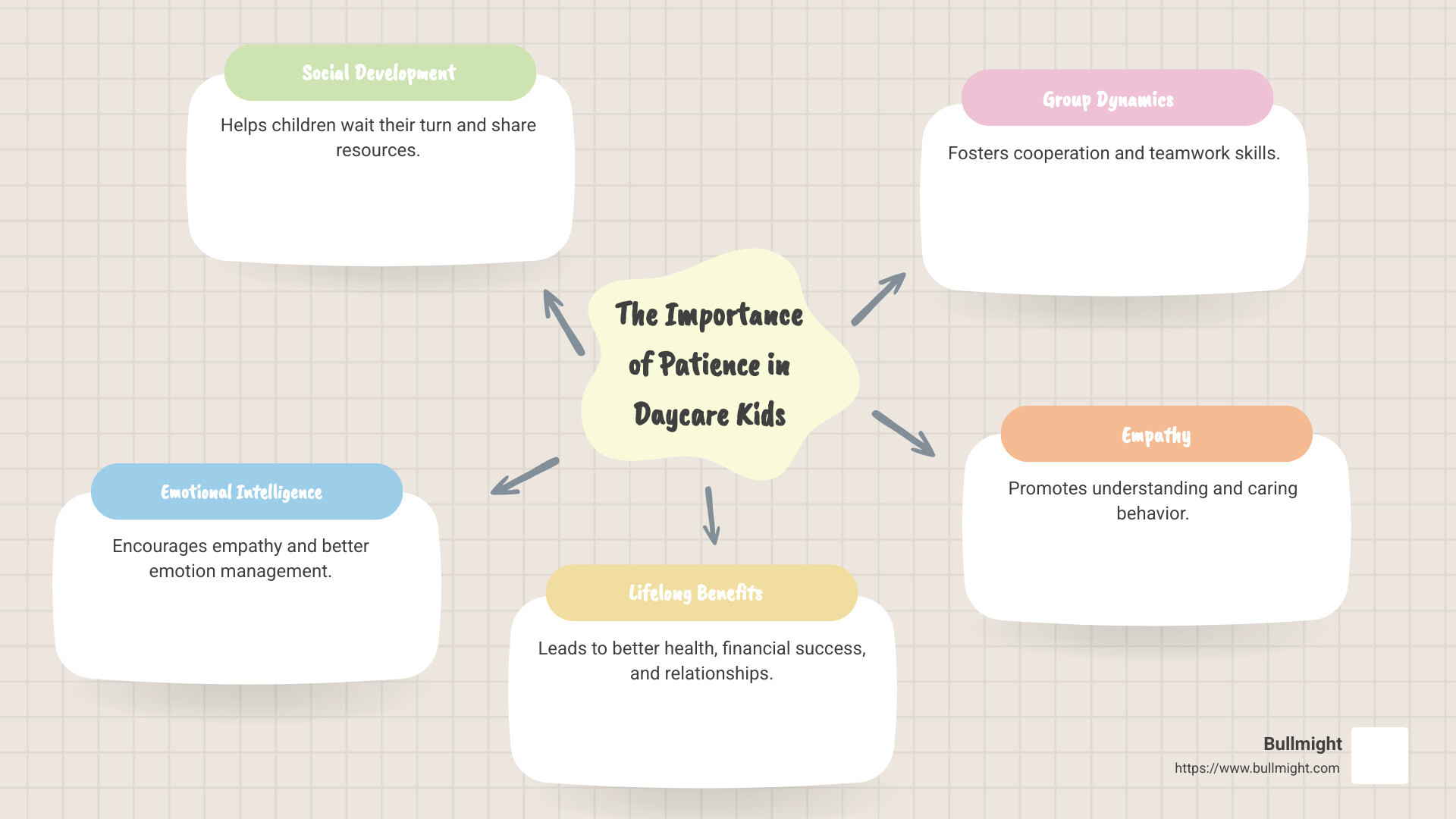
The Importance of Teaching Patience in Daycare Kidscan't be overstated. At its core, patience is a crucial skill that impacts a child's social development and emotional intelligence.
Patience also plays a major role in early cognitive growth. Learn more about Early Brain Development & Learning in Children and how it shapes emotional and social skills.
Here's a quick rundown:
Social Development:Patience helps children learn to wait their turn and share resources, essential skills for making friends and working in groups.
Emotional Intelligence:Children who learn patience tend to be more empathetic and better at managing their emotions, leading to healthier relationships.
Developing patience is closely connected to emotional intelligence. You can explore more strategies in our article on Building Emotional Intelligence Through Community.
Lifelong Benefits:Studies show patient children often experience better health, financial management, and success in adulthood.
Healthy sleep habits also support emotional control and learning. Read our guide on How Sleep Supports Memory & Learning in Children .
Teaching patience in daycare settings involves more than instructing children to wait. It’s about creating an environment where they can practice and understand why it's beneficial. As the daycare leader, you play a vital role in this development.
"Patience is not the ability to wait, but the ability to keep a good attitude while waiting."
The ability to practice patience not only sets the stage for a child's current social interactions but also molds their future. It's an essential element in nurturing well-rounded individuals who thrive both personally and professionally.
The Importance of Teaching Patience in Daycare Kids
Teaching patience in daycare is fundamental for children's growth. It starts withmodeling behavior. Children learn by watching adults. When daycare teachers consistently demonstrate patience, kids naturally mimic this behavior. If a teacher waits calmly for a child to finish speaking, the child learns to do the same with peers.
Emotional regulationis another key aspect. Young children often struggle with big emotions. Patience helps them manage these feelings. When a child learns to pause and reflect before reacting, they gain control over their emotions. This skill is crucial for avoiding tantrums and handling disappointments.
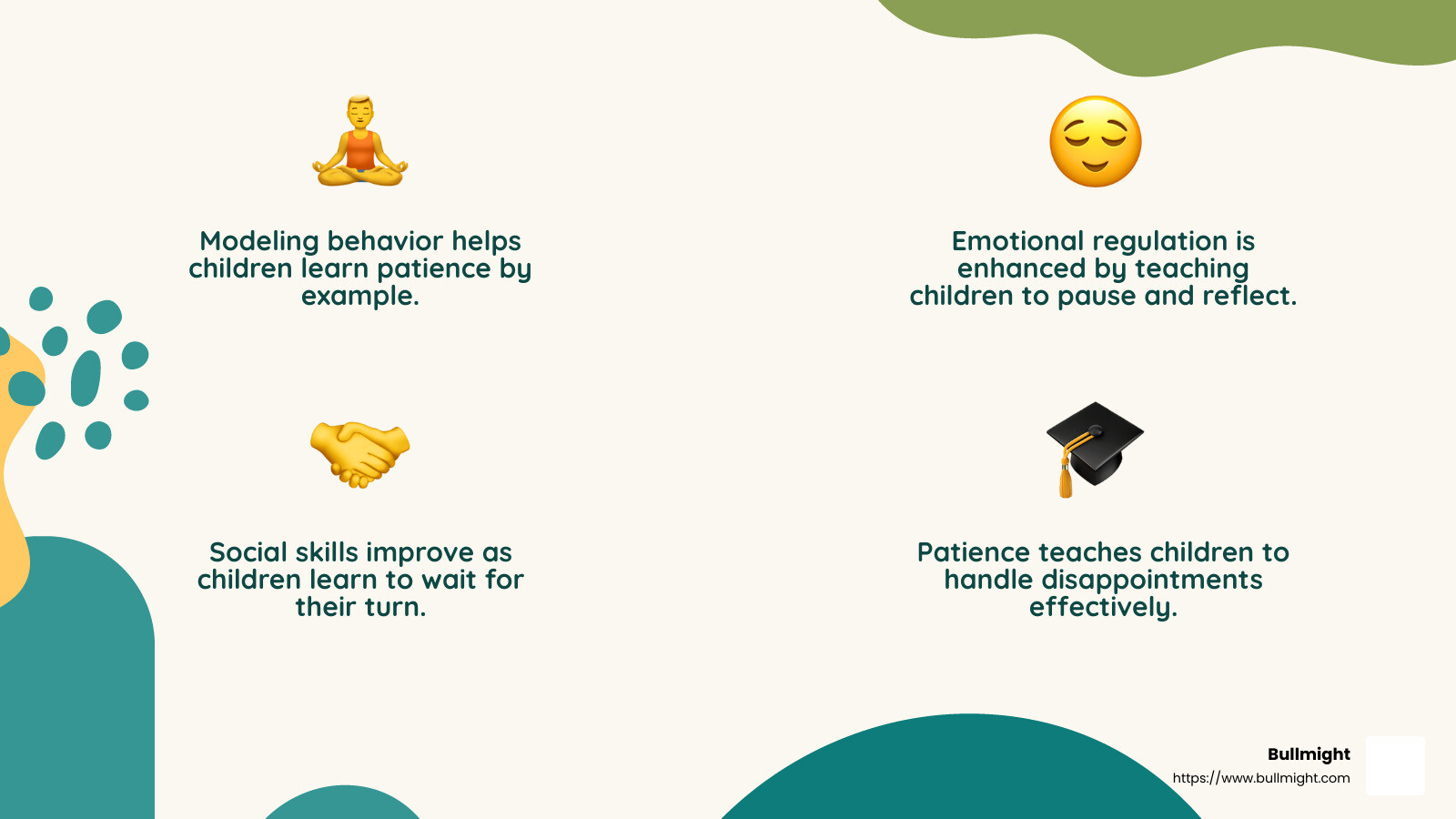
Social skillsare also improved through patience. In a daycare setting, children must wait their turn, share toys, and cooperate during group activities. These interactions teach them how to communicate effectively and build empathy. A child who waits patiently while another shares a story is learning to value others' perspectives.
Incorporating patience into daily activities doesn't just benefit the kids now; it lays the foundation for their future interactions in school and beyond. As they grow, these children will find it easier to steer social situations, manage stress, and build strong, positive relationships.
The next section will dig into strategies for teaching patience, providing practical techniques that daycare teachers can use to foster this essential skill.
Strategies for Teaching Patience
Teaching patience to daycare kids involves creative and practical strategies. Here are some effective methods that daycare teachers can use:
Role-Playing
Role-playing is a powerful tool for teaching patience. It allows children to step into different scenarios and practice waiting. For example, setting up a pretend grocery store where kids take turns being the cashier and the customer can teach them to wait their turn.
Why it works:Role-playing makes learning fun and engaging. It helps children understand the importance of waiting in real-life situations.
Mindfulness
Incorporating mindfulness techniques can greatly improve a child's ability to be patient. Simple practices like deep breathing or focusing on a single task can help children stay calm and present.
Example Activity:Mindful Breathing- Encourage children to take deep breaths while counting slowly. This can be a useful tool when they feel impatient or overwhelmed.
Benefits:Mindfulness helps children manage their emotions and reduces impulsive reactions. It can make waiting less stressful and more manageable.
Delayed Gratification
Teaching delayed gratification involves helping children understand that waiting can lead to better outcomes. Simple activities like waiting a few minutes before opening a snack can illustrate this concept.
The famous Stanford marshmallow experiment demonstrated how delayed gratification influences future success. Learn more from American Psychological Association research .
Activity Idea:The Marshmallow Test- Offer a child a small treat now or a larger one if they wait a few minutes. This classic experiment teaches the value of patience and self-control.
Outcome:Children learn that patience can lead to greater rewards, which is a valuable life lesson.
Clear Expectations
Setting clear expectations is crucial for fostering patience. When children know what to expect, they are more likely to wait calmly.
How to Implement:
Visual Schedules:Use charts or pictures to show the daily routine. This helps children anticipate transitions and reduces anxiety.
Consistent Rules:Establish and consistently enforce rules about taking turns and sharing.
Impact:By understanding what's expected, children feel more secure and are better able to practice patience.
These strategies are not only effective but also adaptable to various daycare environments. By integrating these techniques, daycare teachers can help children develop patience—a skill that will benefit them throughout their lives.
Up next, we'll explore activities to foster patience, providing practical ideas that can be easily implemented in a daycare setting.
Activities to Foster Patience
Fostering patience in daycare kids can be both fun and educational. Here are some engaging activities that help teach this essential skill:
Games
Games likeRed Light, Green LightandSimon Saysare fantastic for teaching patience. These games require children to listen carefully and wait for the right moment to act.
Why they work:These games make waiting a part of the fun. Kids learn to focus and control their impulses while still enjoying themselves.
How to Play:
Red Light, Green Light:Children move when you say "Green Light" and stop when you say "Red Light."
Simon Says:Kids only follow commands that start with "Simon says." This encourages them to listen and wait before acting.
Sand Timers
Using sand timers can be a simple yet effective way to teach waiting. When children play with a toy, a sand timer can signal when it's time to share or switch activities.
Benefits:Sand timers provide a visual cue that helps children understand the passage of time. They learn to wait patiently for the sand to run out before taking their turn.
Tip:Experiment with different timers to find what works best for your group.
Empathy
Teaching empathy helps children understand the feelings of others, which makes waiting easier. For instance, explain why it's important not to rush to the front of the line.
Empathy Activity:Discuss how jumping the line affects others. Encourage kids to think about how their actions make others feel.
Outcome:Children become more considerate and patient when they understand the impact of their behavior on others.
Distraction Techniques
Distraction techniques can help kids manage impatience by keeping them occupied while they wait. Activities like singingThe Itsy-Bitsy Spideror playing with sensory toys can make waiting more enjoyable.
Examples of Distractions:
Sensory Toys:These toys engage children’s senses and keep them busy.
Interactive Songs:Singing and moving to songs can divert attention andmake waiting less tedious.
Why It Works:Distractions shift focus away from the wait, making time seem to pass faster.
These activities not only make learning patience enjoyable but also equip children with skills they can use throughout their lives. Up next, we'll explore how to practice active listening, another key component in developing patience and social skills.
How to Practice Active Listening
Active listening is a crucial skill that helps children develop patience and improve their social interactions. Let's explore some key aspects of active listening, includingbody language,reflective listening, andlistening activities.
Body Language
Body language plays a vital role in active listening. It involves using non-verbal cues to show that you are attentive and engaged. For kids, learning to make eye contact, face the speaker, and nod their heads can significantly improve their listening skills.
How to Model:
Eye Contact:Encourage children to look at the person speaking. This shows they are focused and interested.
Facing the Speaker:Teach kids to turn their bodies towards the person talking. It signals they are ready to listen.
Nodding:A simple nod can indicate understanding and keep the conversation flowing.
Reflective Listening
Reflective listening involves repeating or paraphrasing what the speaker has said to show understanding. This technique reinforces that the listener is paying attention and helps clarify any confusion.
Steps for Reflective Listening:
Listen Carefully:Pay full attention to what is being said.
Reflect Back:Repeat what you heard in your own words. For example, "So you're saying you like playing with blocks?"
Ask Questions:Encourage children to ask questions if they don't understand something. This can deepen their comprehension and engagement.
Benefits:Reflective listening helps children process information better and builds their confidence in conversations.
Listening Activities
Engaging in listening activities can make practicing active listening fun for kids. Games likeTelephoneandI Spyare excellent for honing these skills.
How They Work:
Telephone:Kids sit in a circle and whisper a message around. The goal is to keep the message intact. This game emphasizes careful listening and attention to detail.
I Spy:One child describes an object they see, and others have to guess what it is. This encourages kids to pay attention to verbal cues and details.
Why They Matter:These activities make listening a playful experience, helping childrenlearn without realizing it.
By incorporating these techniques and activities, children can develop better listening skills, which are essential for patience and effective communication. Up next, we'll tackle some frequently asked questions about teaching patience, offering more insights into this important topic.
Frequently Asked Questions about Teaching Patience
Why is patience important in early childhood education?
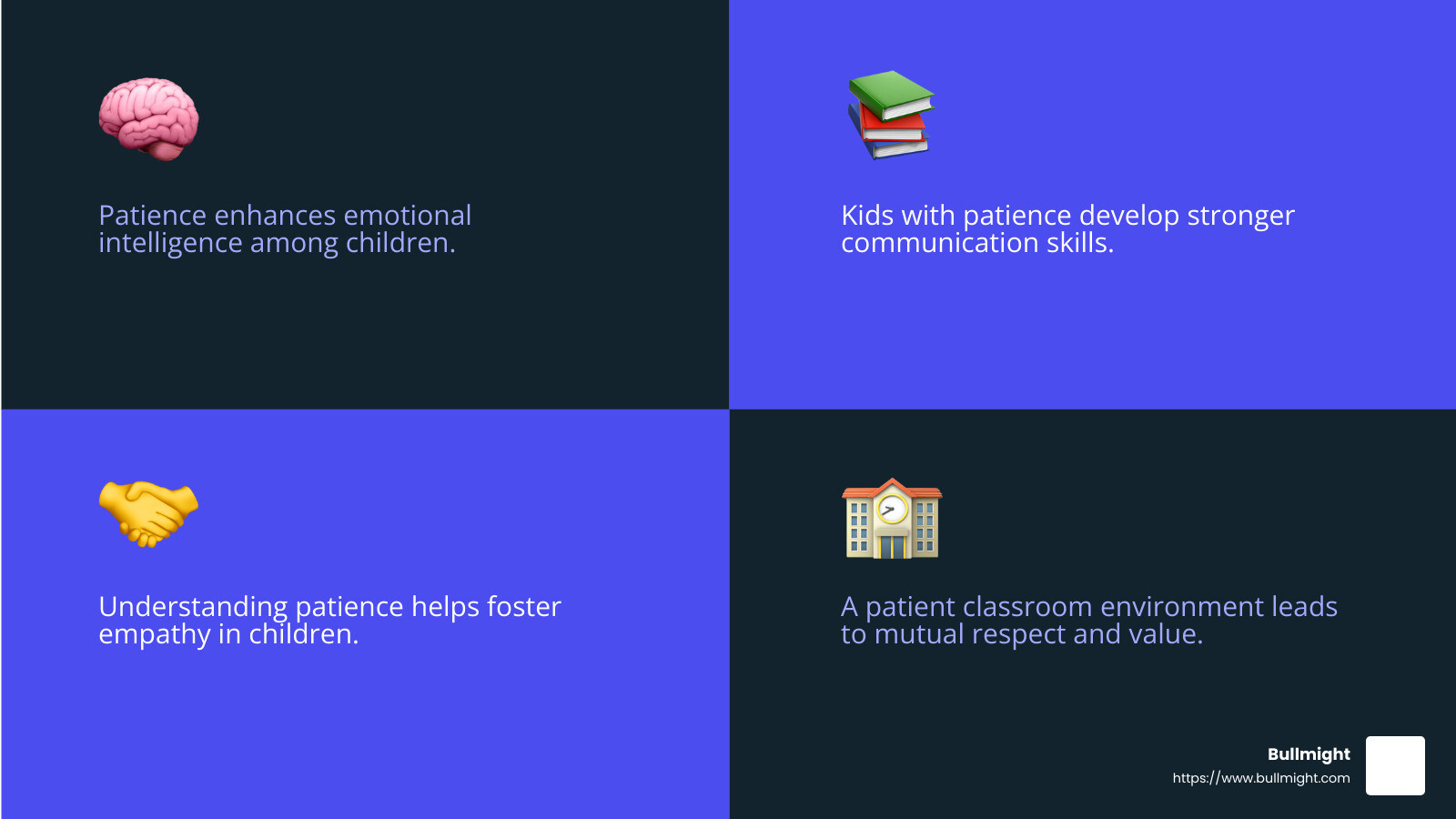
Patience is a cornerstone ofemotional intelligence. It helps children manage their emotions and build better relationships. When kids learn to wait and listen, they develop strongercommunication skills. They become more empathetic, understanding others' feelings and perspectives. This fosters a harmonious classroom environment where kids feel respected and valued.
How can daycare teachers model patience?
Daycare teachers are powerfulrole modelsfor children. They can demonstrate patience through their actions and reactions. Here are a few ways:
Calm Demeanor:Staying calm, even in chaotic situations, shows kids how to handle stress.
Positive Reinforcement:Praising children for waiting patiently or sharing can encourage them to continue these behaviors.
Clear Expectations:Setting clear guidelines helps children understand what is expected, reducing frustration and impatience.
When teachers embody patience, they set a positive example for kids to follow.
What are effective activities to teach patience to preschoolers?
Incorporating fun and engaging activities can make learning patience enjoyable for preschoolers. Here are some effective methods:
Games:Playing games like "Red Light, Green Light" or "Simon Says" teaches kids to listen carefully and wait for their turn.
Waiting Exercises:Use sand timers to help children understand time and practice waiting. For instance, they can wait for the sand to run out before switching activities.
Interactive Songs:Singing songs likeThe Itsy-Bitsy Spiderkeeps kids entertained while they wait, making the process feel shorter.
These activities not only teach patience but also improve children'ssocial skillsand ability to work in groups.
By exploring these frequently asked questions, we can better understand the significance of teaching patience in daycare settings. This knowledge helps create a nurturing environment where children can thrive.
Conclusion
Teaching patience in daycare kids is not just about managing behavior—it's about shaping future adults who are empathetic, resilient, and emotionally intelligent. As we've explored, patience is a key component ofemotional intelligence, helping children develop the ability to understand and manage their emotions. This, in turn, fosters bettercommunication skillsand stronger relationships.
Daycare teachers play a crucial role in this process. By modeling patience, they show children how to handle challenges calmly and thoughtfully. This sets the stage for children to emulate these behaviors, creating a positive and supportive learning environment.
Incorporating engaging activities like games, waiting exercises, and interactive songs makes learning patience fun for preschoolers. These activities not only teach patience but also improve children'ssocial skillsand ability to cooperate with peers.
Learn more about how KIDazzle can help your daycare facility succeed by visiting ourwebsite. Together, let's build a brighter future for our children.
FAQs: Teaching Patience in Daycare Kids
1. What is patience in early childhood?
Patience in young children is the ability to wait calmly, take turns, and manage emotions without frustration or impulsive behavior.
2. At what age should kids start learning patience?
Children can begin learning basic patience skills as early as 2–3 years old through simple activities like waiting for turns and following routines.
3. How can daycare teachers encourage patience daily?
Teachers can encourage patience by modeling calm behavior, setting clear routines, and using tools like timers, games, and positive reinforcement.
4. Why do some children struggle with patience?
Young children are still developing emotional control and impulse regulation, so impatience is natural and improves with guidance and practice.
5. What are simple activities to teach patience?
Activities like turn-taking games, role-playing, using sand timers, and singing songs while waiting help children practice patience.
6. How does patience help in school readiness?
Patience helps children follow instructions, work in groups, and manage emotions, making it easier for them to adapt to structured school environments.
