KIDAZZLE Child Care: 3-Year-Old Brains in College Park

What No One Tells You About Your 3-Year-Old’s Brain Development | Kidazzle College Park
At Kidazzle Little Flyers in College Park, we see something magical every single day — the incredible speed and depth of your child’s developing mind.
At age three, your child’s brain is forming over a million new connections per second.
It’s a time of tremendous creativity, emotional growth, and curiosity.
Every “why?”, every tower of blocks, every moment of joy and frustration is wiring their brain for lifelong learning.
That’s why at Kidazzle, we create a space where your child’s wonder can take flight — through play, patience, and community.
You might also enjoy: Raising Little Leaders: How Early Confidence Builds Future Success
The Science of Growth at Age 3
Your child’s brain is in overdrive — building the foundations for memory, reasoning, empathy, and independence.
At Kidazzle Little Flyers, we turn that scientific growth into playful learning.
Our teachers guide children through:
Exploration-based learning that connects curiosity to discovery.
Language-rich playtime that strengthens early communication.
Social-emotional lessons that help children build patience, empathy, and teamwork.
These aren’t just classroom moments — they’re brain-building opportunities that last a lifetime.
According to research from the Harvard Center on the Developing Child, early brain development is built through everyday interactions and experiences.
Big Feelings, Bigger Understanding
Three-year-olds feel emotions intensely — joy, frustration, pride, independence — often all within the same hour.
At Kidazzle, we teach children that emotions aren’t problems to fix — they’re clues to understand.
Our teachers help children:
Identify feelings with “emotion cards” and visual cues.
Practice calm-down techniques through deep breaths or short reflection breaks.
Celebrate kindness and empathy in real time — when they share, help, or comfort a friend.
When emotions are named and respected, children feel more confident and connected.
Play that Builds Brains
At age three, movement and imagination are the engines of learning.
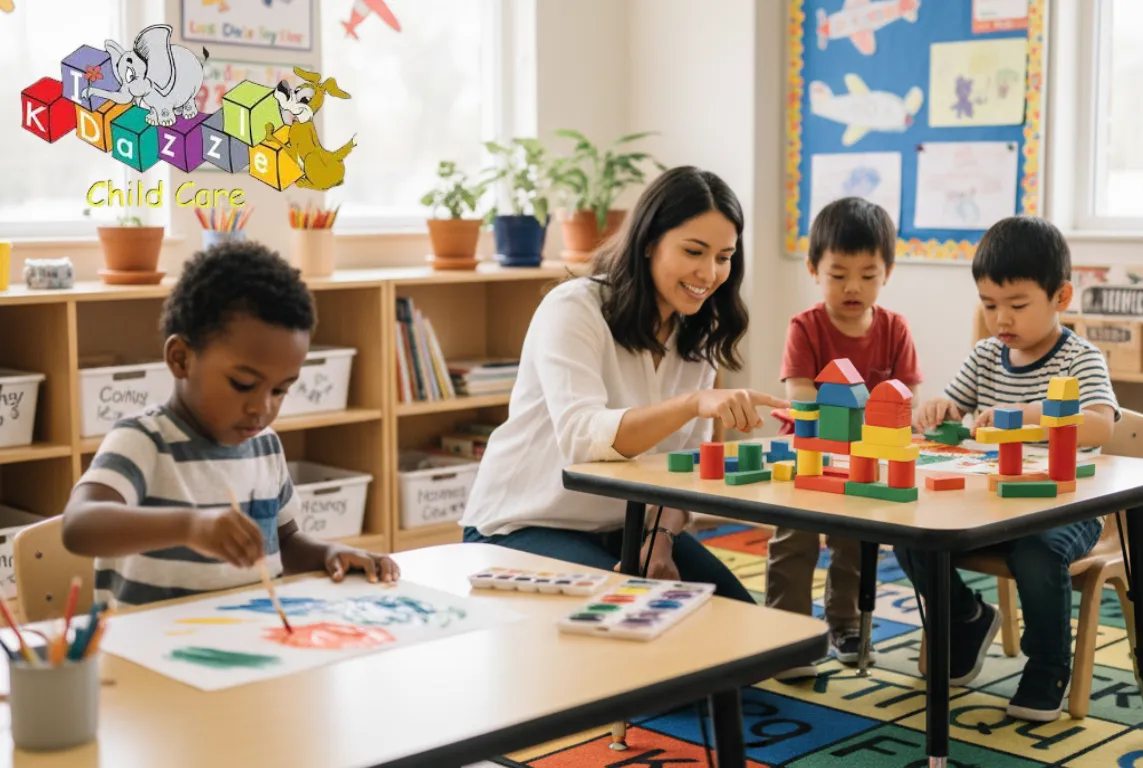
From stacking blocks to dancing to music, every action builds focus, coordination, and problem-solving skills.
At Kidazzle Little Flyers, we mix creativity and structure through:
Storytime circles that spark imagination
Art and music that boost brain activity
Team play that encourages cooperation and communication
Our classrooms are full of motion, laughter, and learning — because play is the brain’s favorite way to grow.
Continue exploring: Healthy Minds, Happy Bodies: How Nutrition and Movement Boost Early Learning
A Community That Lifts Children Higher
At Kidazzle, we believe children thrive when families and communities work together.
Our College Park neighborhood offers wonderful examples of care, creativity, and connection that reflect our learning philosophy:
Teenie Weenie Kid’s Salon — building confidence one haircut at a time.
Paper Plane Yoga — helping parents and caregivers recharge through mindfulness and movement.
Virgil’s Gullah Kitchen & Bar and Hattie Marie’s Texas BBQ — places where families gather, connect, and share laughter after long days.
Rods N Razors II — a reminder that self-care matters for parents too.
College Park City Hall — symbolizing community structure and teamwork.
These local businesses don’t just serve — they model the same patience, creativity, and care we teach in our classrooms.
Learn more about early development: How Play-Based Learning Shapes Your Child’s Future
The Kidazzle Difference: Where Every Child Takes Flight
At Kidazzle Little Flyers College Park, we give children the space to grow, the guidance to thrive, and the confidence to explore.
We know that at age three, every experience matters — because every connection formed now becomes the foundation for future success.
📍 Visit Kidazzle Little Flyers in College Park to see how we help young minds take flight — one discovery, one feeling, and one moment at a time.
FAQs About 3-Year-Old Brain Development
What should a 3-year-old be learning?
At age three, children learn through play, language interaction, and exploration. They begin developing communication skills, emotional understanding, and basic problem-solving abilities.
Why are emotions so strong at age 3?
Three-year-olds are still learning how to manage their emotions. Their brains are developing rapidly, but self-control skills are still growing, which leads to big emotional reactions.
How can parents support brain development at home?
Parents can support development by talking with their child, encouraging play, reading together, and creating a safe, responsive environment where children feel heard and supported.
Is play really important for brain growth?
Yes, play is one of the most important ways children learn. It helps build creativity, problem-solving skills, social abilities, and emotional strength.
