
An Essential Guide to Teaching Your Child to Share
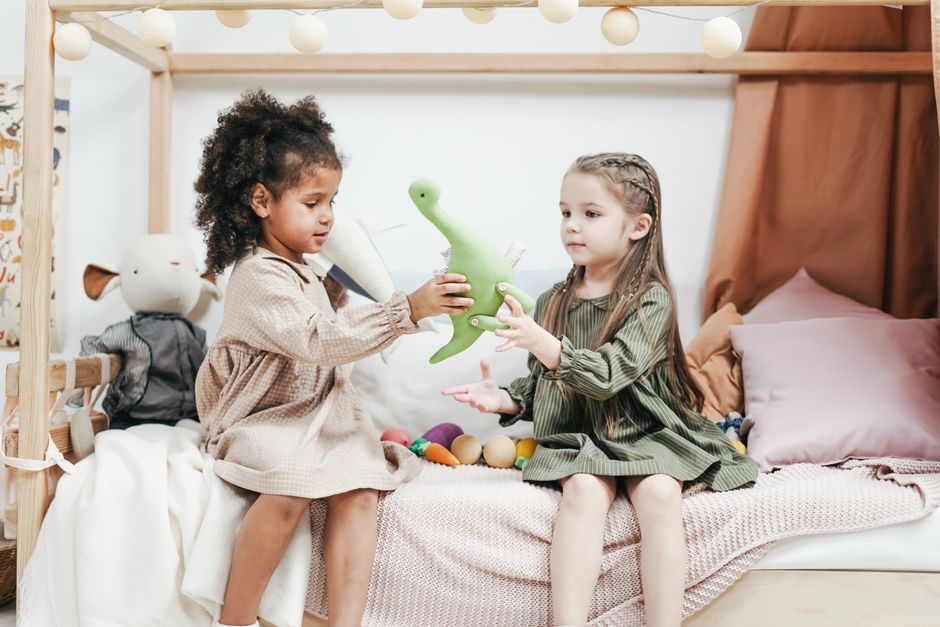
Is It Important To Teach Your Child To Share?Absolutely, and here's why:
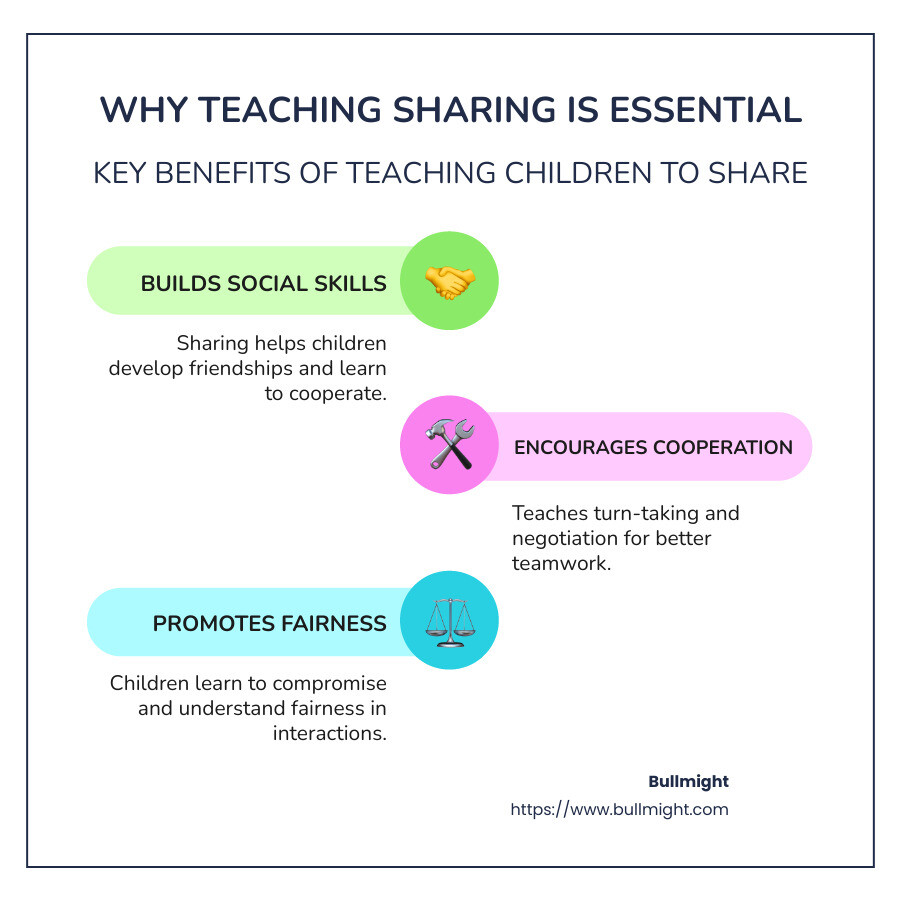
Builds Social Relationships: Sharing helps children make and keep friends by learning to play cooperatively.
Improves Cooperation: It teaches kids how to take turns and negotiate, fostering a spirit of teamwork.
Promotes Fairness and Compromise: Children understand the value of giving a little to get what they want.
As your child steps into playdates, child care, and preschool, sharing becomes a key ingredient in developing healthy social interactions. Modeling good sharing and turn-taking at home sets a strong foundation for your child's social life. By practicing with siblings or friends, children learn that sharing not only brings joy but also opens doors to new possibilities and friendships.
A recent study highlights sharing as essential for boosting interpersonal skills and nurturing emotional growth. Learning to share is more than just a social nicety—it's a vital life skill that benefits children long-term.
Is It Important To Teach Your Child To Share?
Developmental Stages
Teaching your child to share aligns with their developmental journey. At different ages, children grasp the concept of sharing in unique ways. Toddlers, for instance, often struggle because they don't fully understand the idea of taking turns. It's common for a 2-year-old to see a toy and want it immediately, not realizing they need to wait. But as they grow, their ability to understand and practice sharing improves.how to teach kids to share
Preschoolers start to recognize the benefits of sharing. They learn that sharing toys can lead to more fun and engaging play. By school age, children are more adept at sharing and are beginning to appreciate the emotional rewards, like making friends and feeling good about themselves.
Explore early childhood development milestones for better understanding.
Social Skills
Sharing is a cornerstone of developing social skills. When children share, they learn how to communicate, negotiate, and cooperate with others. These skills are crucial for making friends and working in groups. Playing games that involve sharing and turn-taking can reinforce these skills. For example, saying, "Now it's my turn, and next it's yours," helps children understand the flow of give and take.
Children develop sharing skills over time.
Emotional Growth
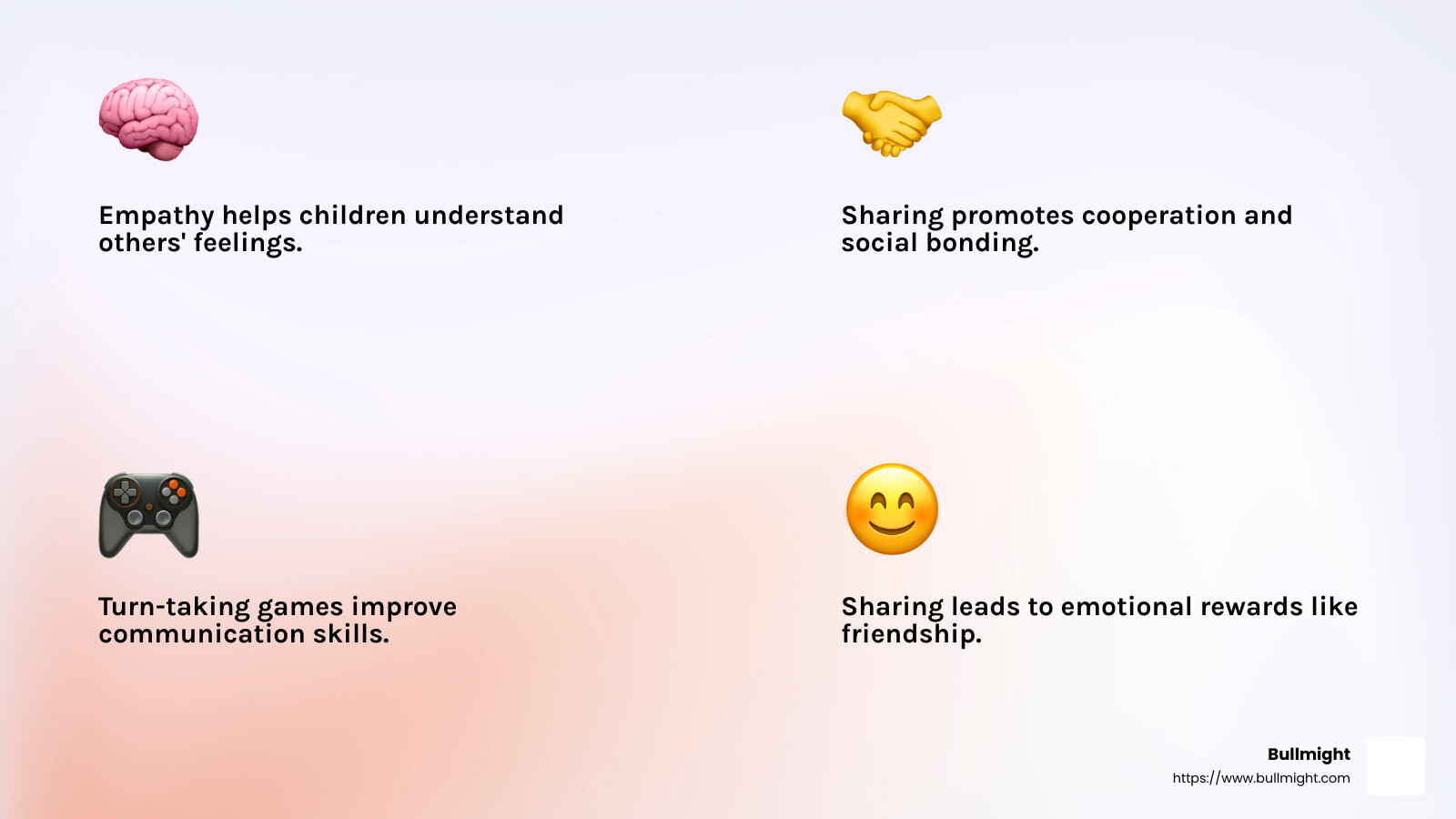
Sharing also fosters emotional growth. It teaches children empathy by helping them recognize and respect others' feelings. When a child shares a toy, they learn to see the joy it brings to their friend. This experience is vital for building strong, positive relationships. Emotional growth through sharing also includes learning to cope with disappointment. When a child doesn't get what they want immediately, they learn patience and resilience.
In conclusion, teaching your child to share is not just about making them polite. It's about equipping them with essential life skills that will benefit their social and emotional development. As they steer different stages of growth, these skills become invaluable in nurturing their overall well-being and preparing them for future interactions.
Learn more about child development from trusted child development resources.
Age-Appropriate Sharing Techniques
Children learn to share at their own pace, and the techniques used to teach them should match their developmental stage. Here’s how you can guide toddlers, preschoolers, and school-age children through the process of learning to share.
Toddlers
Toddlers are just beginning to understand the world around them. At this age, sharing is often a foreign concept because toddlers are naturally egocentric. They see a toy and want it for themselves, often exclaiming, "No, it's mine!"
To help toddlers start learning about sharing:
Use the phrase "taking turns" instead of "sharing."This helps clarify what’s expected. For example, saying, "Let's take turns with the truck," can be more understandable.
Introduce sharing through structured play.Play games that involve taking turns, like rolling a ball back and forth.
Model sharing behavior.Show them how you share with others in everyday situations. Narrate your actions: "I’m sharing my book with you."
Praise when they attempt to share.Even if it’s not perfect, acknowledge their effort: "Great job waiting for your turn!"
Preschoolers
Preschoolers are more socially aware and can start understanding the benefits of sharing. They enjoy playing with others and can begin to see that sharing can improve their playtime.
Here are some strategies for preschoolers:
Set up scenarios that require sharing.Use toys or activities that naturally involve more than one child, like building blocks or art supplies.
Encourage empathy.Talk about how sharing makes others feel: "Look, your friend is happy because you shared your crayons."
Create opportunities for cooperative play.Games that require teamwork can reinforce the idea that sharing leads to fun and success.
Discuss and agree on rules.Before playdates, talk about which toys are for sharing and which are special and can be put away.
School-Age Children
By school age, children are more adept at sharing and can handle more complex social interactions. They understand the emotional rewards of sharing, like making friends and feeling good about themselves.
For school-age children, consider these techniques:
Involve them in decision-making.Let them choose which toys they’re willing to share and discuss why sharing is important.
Use role-playing to explore different scenarios.This helps them think about how to handle situations where sharing might be challenging.
Encourage them to resolve conflicts.Teach them to use phrases like, "Can we take turns?" or "Let's play together."
Recognize and reinforce positive sharing behavior.Focus on the impact of their actions: "It was kind of you to share your book. Yourfriend really enjoyed it."
Each age group requires different strategies, but the goal remains the same: to teach children the value and joy of sharing. As they grow, these skills will help them build strong relationships and steer social situations with confidence.
Strategies for Encouraging Sharing
Encouraging children to share can seem daunting, but with the right strategies, it becomes a natural part of their development. Here’s how you can foster sharing through modeling behavior, praise, attention, and playdate preparation.
Modeling Behavior
Children learn a lot by watching adults. When they see you sharing, they understand that it’s a valuable behavior.
Demonstrate sharing in everyday life.For example, share a snack with your child and say, "I’m sharing my apple with you. Sharing makes me happy!"
Narrate your actions.When you share something, explain what you’re doing: "I’m letting Dad use my pen because sharing helps us both."
Involve them in your sharing.Ask your child to help you share something, like setting the table for family dinner.
Modeling is powerful. When children see sharing in action, they’re more likely to imitate it.
Praise and Attention
Recognizing and praising sharing behavior reinforces its importance.
Acknowledge sharing efforts.Even small acts deserve praise. Say, "I saw you let your friend play with your truck. That was kind!"
Focus on the impact of their actions.Highlight how sharing made others feel: "Look how happy your friend is because you shared your crayons."
Encourage with positive language.Instead of just saying "good job," explain why it was good: "You waited patiently for your turn. That was very thoughtful."
Praise helps children associate sharing with positive feelings, making them more likely to do it again.
Playdate Preparation
Playdates are excellent opportunities to practice sharing in a real-world setting.
Discuss sharing before the playdate.Talk about which toys are for sharing and which are special and can be put away.
Set clear expectations.Explain that sharing makes playtime more fun: "When you share, you both get to enjoy playing together."
Create sharing-friendly environments.Use games and activities that naturally involve more than one child, like puzzles or building blocks.
Stay nearby to guide interactions.If a sharing conflict arises, help them steer it: "I see you both want the toy. Let’s take turns."
Preparing for playdates helps children anticipate and understand sharing expectations, reducing conflicts andenhancing their social skills.
By modeling behavior, offering praise and attention, and preparing for playdates, you can create a supportive environment that encourages sharing. These strategies help children see sharing as a positive and rewarding experience, paving the way for strong social relationships.
Overcoming Challenges in Sharing
Teaching children to share can be challenging, especially when they struggle with concepts like patience and emotional regulation. However, understanding these problems can help you guide them more effectively.
Cognitive Development
Cognitive development plays a crucial role in a child's ability to share. Young children often see the world only from their own perspective, making it hard for them to understand why they should share.
Recognize developmental stages.Understand that toddlers may not grasp sharing as well as older children. It's normal for a 2-year-old to have difficulty waiting for a toy.
Use simple explanations.When explaining sharing, use clear and simple language. For example, "When you share, everyone gets a turn."
Practice turn-taking.Games that involve taking turns can help children learn patience and the concept of waiting.
Emotional Regulation
Children often experience strong emotions when asked to share, such as frustration or disappointment.
Teach emotion management.Help your child name and understand their emotions. Saying, "I see you're upset because you want the toy," validates their feelings.
Model calm behavior.Show how to stay calm when you’re frustrated. Your example helps them learn to regulate their emotions.
Introduce calming techniques.Teach simple strategies like deep breathing or counting to ten to help them manage strong feelings.
Patience
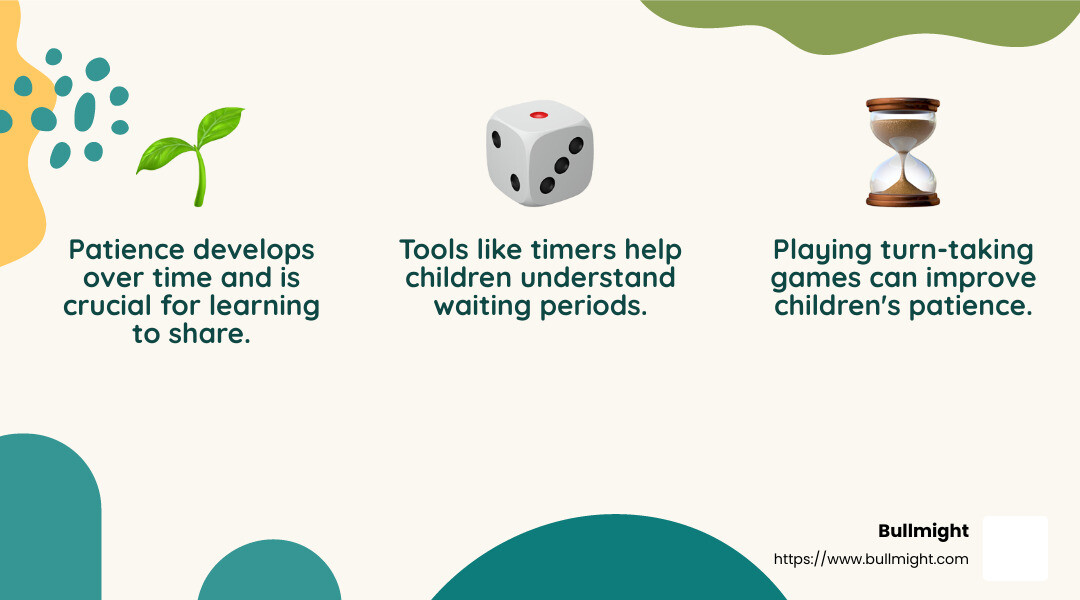
Patience is a key component of sharing, and it’s a skill that develops over time.
Set realistic expectations.Understand that young children have short attention spans and may not wait long periods for a turn.
Use visual aids.Tools like timers can help children understand how long they need to wait.
Celebrate small victories.Praise your child when they successfully wait for a turn, reinforcing the value of patience.
By focusing on cognitive development,emotional regulation, and patience, you can help your child overcome challenges in sharing. These skills not only make sharing easier but also contribute to their overall social and emotional growth.
Next, let’s explore some frequently asked questions about sharing to further clarify this essential skill for children.
Frequently Asked Questions about Sharing
Why is sharing important for children?
Sharing is crucial for children because it helps them build strong social relationships. When kids share, they learn how to make friends, cooperate, and play well with others. Sharing also teaches them aboutcompromise and fairness. For example, when children share their toys, they understand that everyone can have fun together. This skill is especially important as children start having playdates and attend preschool or kindergarten.
Another reason sharing is important is that it teaches children aboutemotional growth. They learn how to manage feelings like disappointment when they have to wait for their turn. By sharing, children also learn empathy. They understand how their actions affect others, which is a big step in their emotional development.
What age should you teach your child to share?
Teaching children to share should start early, but it's important to recognize that understanding and practicing sharing evolves with age.
Toddlers (around 2 years old): At this age, children may not fully understand the concept of sharing. They often see the world from their own perspective. It's normal for them to have trouble waiting for a toy or sharing it with others. However, you can begin introducing simple sharing games to help them learn.
Preschoolers (3 to 5 years old): Children in this age group start to grasp the idea of turn-taking and sharing more easily. You can encourage sharing by pointing out good examples in others and praising your child when they share.
School-age children (6 years and above): By this age, children should have a better understanding of sharing. They can practice more advanced sharing techniques, like negotiating turns and understanding the consequences of not sharing.
Is it normal for kids to not want to share?
Yes, it's completely normal for kids to resist sharing, especially at a young age. Children often experience strong emotions when asked to share, such as frustration or disappointment. This is because they are still developing skills likepatience and emotional regulation. Young children might not understand why they need to share something they really want to keep for themselves.
It's important to be patient and use positive reinforcement. When children start to share, even a little, offer lots of praise. This helps them see sharing as a positive experience. Over time, as they develop better emotional regulation and cognitive skills, sharing will become easier for them.
By understanding these common concerns about sharing, you can better support your child's development and help them build essential social skills.
Also read: importance of sharing in children.
Conclusion
In conclusion,teaching your child to shareis an essential part of their development. Sharing is not just about giving up a toy or a turn; it's about building lasting social skills and emotional intelligence. As children learn to share, they also learn critical life skills like empathy, patience, and cooperation.
Sharing is a skill that develops over time. Each child progresses at their own pace, and that's perfectly normal. By using age-appropriate techniques and being patient, you can guide your child through this important learning process.
For parents and caregivers, the key is to provide opportunities for sharing in a supportive environment. Encourage your child by modeling sharing behavior yourself and offering praise when they share. This helps them see sharing as a positive and rewarding experience.
Teaching children to share lays the groundwork for healthy relationships and effective communication. As they grow, these skills will help them steer friendships, school, and eventually, the workplace.
If you're interested in more strategies for enhancing your child's social skills, consider exploringKIDazzle Child Care , Inc.custom marketing solutions for childcare facilities.
By focusing on sharing and other social skills, we can help children become well-rounded individuals ready to face the world with kindness and understanding.
