Teaching Feelings Through Community: How Kidazzle West End Builds Emotional Intelligence in Young Learners
Teaching-feelings-through-community-how-kidazzle-west-end-builds-emotional-intelligence-in-young-learners
At Kidazzle West End, we know that learning goes beyond ABCs and 123s. The foundation of a happy, confident child starts with emotional intelligence — the ability to recognize, name, and manage feelings.
In our classrooms, emotions aren’t something to “get over.” They’re something to understand, explore, and use as building blocks for empathy, patience, and communication.
When children learn to manage their emotions early, they don’t just grow smarter — they grow kinder.
Why Emotional Intelligence Matters
Emotional intelligence (EQ) helps children navigate both the classroom and the world around them. A child who can say, “I feel sad,” instead of acting out, is already learning the skill of self-awareness — one of the most powerful predictors of lifelong success.
Studies show that emotionally intelligent children:
Form stronger friendships
Resolve conflicts calmly
Handle frustration more effectively
Transition into school with greater confidence
And at Kidazzle West End, those skills start developing from the very first day.
Strong literacy begins with emotional understanding.→
Learn how Kidazzle West End supports emotional intelligence alongside academics
How We Teach Feelings at Kidazzle
In each classroom, Kidazzle teachers create daily opportunities for emotional growth:
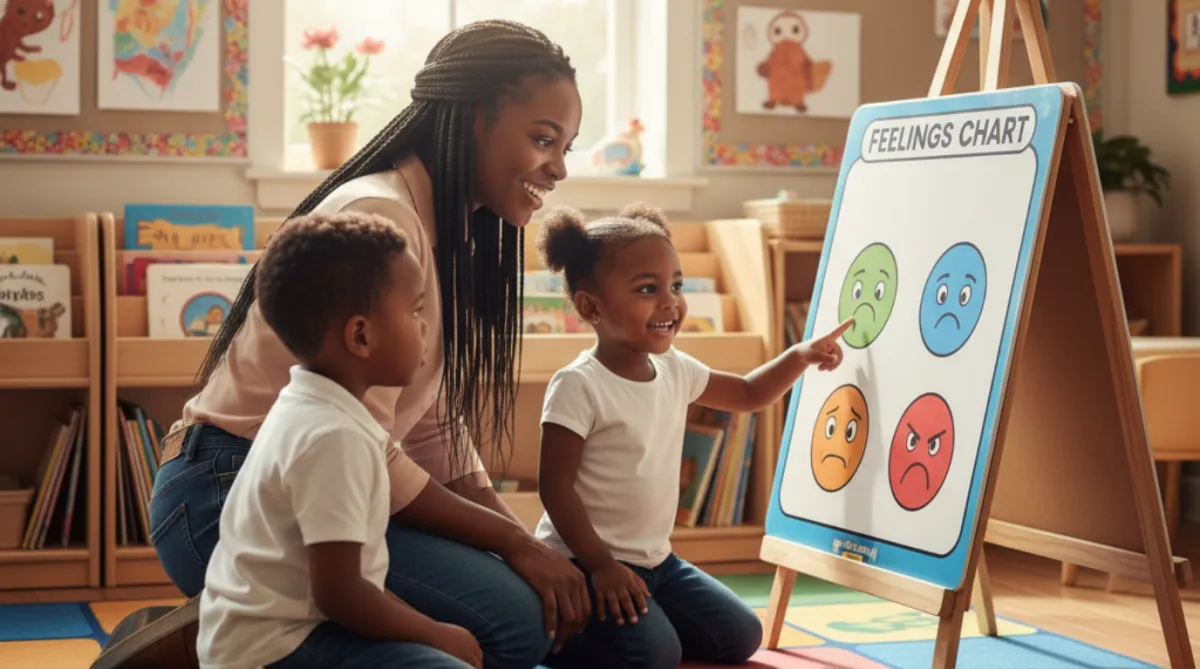
Morning Check-Ins: Children are encouraged to share how they feel using emotion cards or expressive drawings.
Storytime Conversations: Books like The Color Monster help children connect colors with emotions.
Guided Play: Teachers model how to talk through frustration, take turns, and celebrate small wins.
Reflection Moments: At the end of the day, we ask: “What made you happy today?” or “What helped you feel better when you were upset?”
Each conversation teaches vocabulary for emotions — turning feelings into something children can talk about instead of act out.
The Power of Community in Emotional Learning
West End isn’t just where we teach — it’s part of how we teach.
Our neighborhood businesses reflect the same spirit of care, connection, and culture that we bring into every classroom.
Afro Centric Network on Lee St SW helps families explore identity and expression through art and culture.
Tina & Kadijah Hair Braiding on Lee St SW gives kids and parents a confidence boost with every visit.
World Finance on Lee St SW supports families in managing life’s responsibilities — because financial stability impacts emotional peace.
The New Soul Veg Café and Hong Kong City on Ralph David Abernathy Blvd SW give parents and children places to relax, refuel, and reconnect after a full day of learning.
When families, educators, and community spaces work together, children see that kindness and communication are part of everyday life — not just classroom lessons.
Helping Parents Support Emotional Growth at Home
Parents are children’s first emotional teachers.
Here are a few simple ways to nurture your child’s emotional intelligence beyond the classroom:
Name the Feeling: “You’re upset because your tower fell. That’s frustration.”
Model Calm: Show how you breathe deeply or take a moment when stressed.
Praise Emotional Effort: “I love how you told me you were mad instead of yelling.”
Encourage Storytelling: Ask, “How did that make you feel?” when reading together.
These small habits turn big emotions into learning opportunities.
Read next: The Parenting Playbook: From Tantrums to Triumphs
Emotional skills grow best when parents and educators work together at Kidazzle
The Kidazzle West End Difference
Every day, we see children transform — from toddlers who cry when frustrated to preschoolers who can calmly say, “I need help.”
That’s emotional growth in action.
That’s what happens when a childcare center isn’t just a classroom — it’s a community of care.
📍 Visit Kidazzle West End today and see how we help children grow from the inside out — one feeling, one friendship, one smile at a time.
Helping children recognize and manage emotions early builds lifelong confidence.→
Learn how we teach emotional intelligence at Kidazzle West End
👉 Key Points
1. Emotional Intelligence Matters Early
EQ helps children recognize and manage feelings, build friendships, resolve conflicts, and transition confidently into school life.
2. Daily Classroom Practices
Kidazzle West End uses routines like:
Morning check-ins with emotion cards
Storytime conversations linking books to feelings
Guided play that models calm communication
Reflection moments about emotions at day’s end
3. Community as a Learning Environment
The blog highlights how local businesses and neighborhood connections extend the classroom:
Places like salons, cafés, and community centers model care, calm, and connection.
4. Partnership With Parents
Teaching children about feelings continues at home: naming feelings, modeling calm responses, praising emotional effort, and encouraging discussions.
❓ Frequently Asked Questions (FAQs)
1. Why is emotional intelligence important for young children?
Emotional intelligence helps children understand their feelings, communicate calmly, build friendships, and handle frustration. These skills support confidence, behavior, and learning both in school and at home.
2. How does Kidazzle West End teach emotional intelligence?
Kidazzle West End teaches emotional intelligence through daily conversations, guided play, storytelling, and community connections that help children name emotions, practice empathy, and learn self-regulation.
3. How can parents support emotional growth at home?
Parents can support emotional growth by naming feelings, modeling calm behavior, listening without judgment, and encouraging children to talk about their emotions during everyday activities.speech development milestones
4. How does community involvement help emotional learning?
Neighborhood connections show children real examples of kindness, communication, and belonging, reinforcing classroom-based emotional skills in everyday life.
5. What activities help build emotional intelligence in early childhood?
Play-based activities like emotion charades, reflective story prompts, calm-down routines, and guided cooperative tasks help children name feelings and regulate reactions.
